Energy
Your Bin Rules Changed Twice in Seven Years. How to Tell What Yours Is Sorted For Now
A sorted bin is sorted for a buyer, not a symbol, and the buyer list has changed twice since 2018. Here is how to find your program's current answer in one afternoon.
EnergyYolanda Escamilla
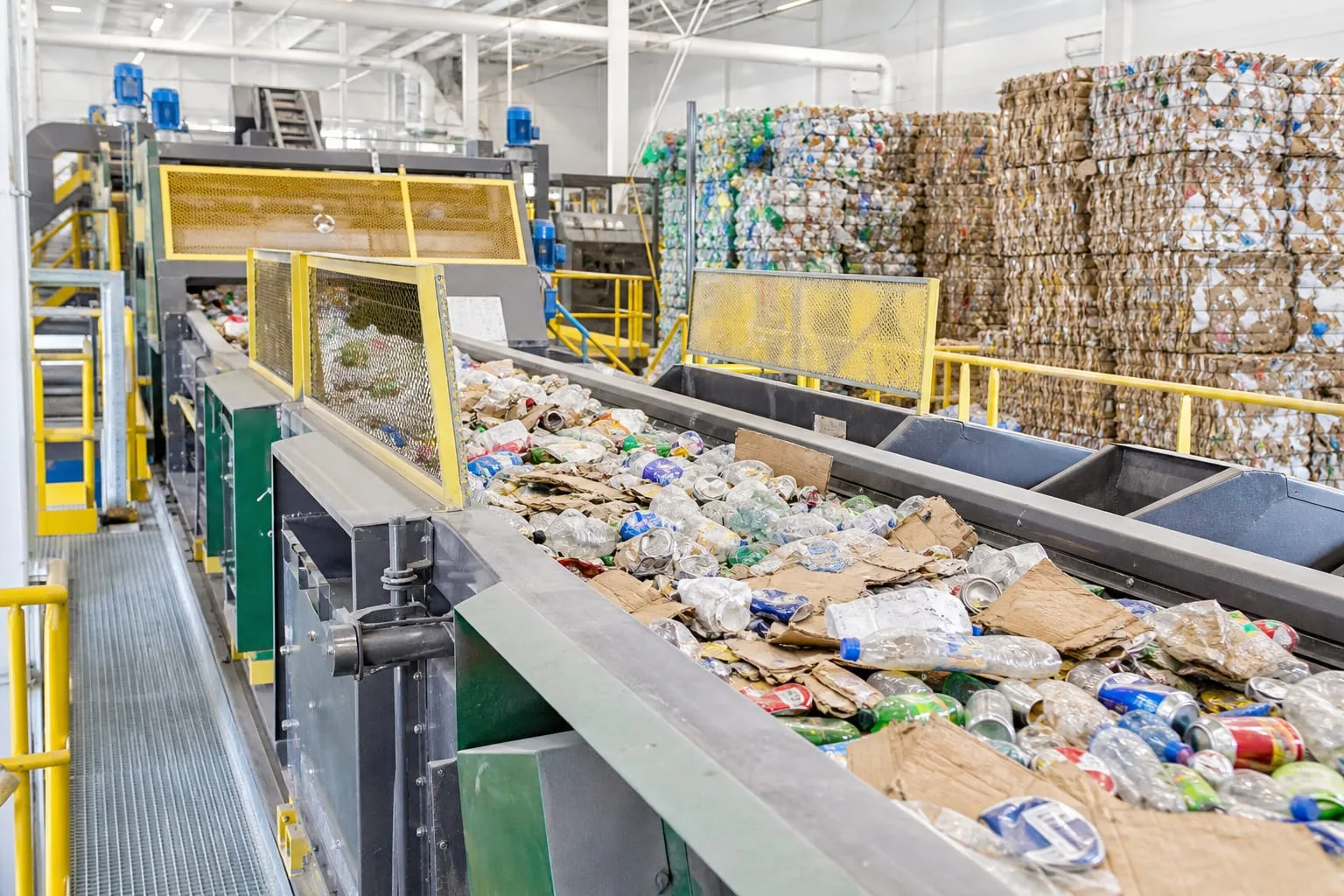
The useful question is not whether an item is recyclable. It is whether the facility that receives your cart has a buyer for a bale of that item this quarter, and whether the machinery on its sorting line can separate your item into that bale at speed. Those two conditions decide what happens after the truck leaves, and neither is printed on the package. Both have moved twice in the last seven years, once because an export market closed and once because several states rewrote who pays for the system. Learning to read your own program takes an afternoon, and it holds for about a year.
A sorted bin is sorted for a buyer, not for a symbol
Your cart goes to a materials recovery facility, where a combination of screens, air jets, magnets, optical scanners and human hands separates the stream into commodities: old corrugated cardboard, mixed paper, natural and colored high-density polyethylene, polyethylene terephthalate bottles, aluminum, steel, sometimes glass. Each of those leaves as a baled commodity with a price and a specification, including a tolerance for contamination. When a mill or reclaimer will not buy a bale, or will only buy it below the cost of making it, the facility stops making that bale and the material is landfilled even though it arrived clean. The resin number stamped in the triangle describes chemistry. It does not describe demand.
This is why two households forty miles apart get different correct answers about the same yogurt tub. One facility runs an optical sorter tuned to catch polypropylene and has a reclaimer within trucking distance; the other does not, and a tub thrown in optimistically becomes a small piece of the residue that facility pays to dispose of. The Environmental Protection Agency oversees municipal solid waste policy nationally, but the accepted list that governs your Tuesday morning is written locally, by whoever holds the processing contract.
What closed in 2018, and what has been opening since
For roughly two decades, a large share of American mixed paper and mixed plastics was baled loosely and shipped to Chinese mills, which tolerated contamination that domestic buyers would not. Beginning in 2017 and taking full effect in 2018, China's import restrictions ended that arrangement, and the contamination thresholds attached to the new rules were tight enough that mixed bales effectively lost their market. The immediate consequences were visible to households: programs dropped glass, dropped mixed rigid plastics, shortened their accepted lists to cardboard, paper, cans and bottles, and in some cities added or raised a line item on the utility bill.
The second change is quieter and still underway. Domestic capacity was built to absorb material that no longer had anywhere to go, particularly for cardboard and for bottle-grade PET, which means some of the items dropped in 2018 have quietly come back onto accepted lists without any announcement a household would notice. If you shortened your habits in 2019 and never revisited them, you are probably throwing away material your facility now wants, and doing it out of caution rather than carelessness.
Extended producer responsibility, and why your list may be about to grow
Several states have now passed laws that shift the cost of collecting and processing packaging from ratepayers to the companies that put the packaging on shelves. Maine and Oregon went first, followed by Colorado, California and Minnesota, each with its own timetable and its own definition of covered material. Oregon's program began operating in 2025; the others phase in across the second half of the decade. The mechanism matters more than the label. Under these laws a producer-funded organization negotiates a statewide list of accepted materials and pays facilities to handle it, which tends to standardize what is accepted across a state and to widen it, because the money to sort an awkward item now comes from somewhere.
For a household in one of those states, the practical effect is a list that changes on a published schedule rather than at the whim of a commodity price, and a state agency that has to publish the list. For everyone else, the effect is indirect: packaging designed to qualify in California tends to show up nationally, and reclaimers built to serve a mandated stream buy from facilities outside the mandate too.
Getting an answer that holds, and the hours it costs
Start with the entity that holds the processing contract, not the entity that sends the bill. In a city with municipal collection those are the same office; in a suburb with a franchised or subscription hauler they are usually not, and the hauler's national website will show a generic list while the local facility runs a different one. The call worth making is to the facility itself, whose scale house or outreach line will answer during business hours, typically between seven and three, and will tell you plainly which bales they make. That is one phone call, ten minutes, taken during the workday.
The document worth reading is the processing agreement or the annual report the hauler files with the city, which names the facility, lists the commodities and often states the contamination rate. Both are public and both are usually posted rather than mailed. If your program runs a drop-off site for glass, film plastic or scrap metal, check its hours before you plan around it; many are staffed only on weekday mornings and one Saturday a month, which turns a small errand into a scheduling problem if you discover it after loading the car.
The four decisions that change your bin's outcome
Plastic film, meaning bags, wrap, and anything that behaves like a bag, wraps around the spinning screens and forces the line to stop for cutting; it belongs at a store take-back, not in the cart. Anything smaller than a credit card falls through the screens into the wrong stream and is lost regardless of material. Cords, hoses and holiday lights do the same damage as film and cause the same shutdown. Food residue is a matter of degree rather than perfection: a rinsed jar is fine, a half-full one downgrades the paper it rides with. Learning those four is worth more than memorizing resin codes, because they hold no matter which buyer your facility is selling to this year.
Put a reminder in your calendar for the same week each year, look at the accepted list, and check whether your state has a producer-funded program that has published a new one. The list will keep moving, because the buyers keep moving, and an annual fifteen minutes is the whole cost of keeping up with it.