Energy
Signing a Solar Contract in Fall? What the Season Does to the Payback Math
A fall solar install and a spring one can show the same payback on paper and behave very differently in the first year, mostly because of time rather than money.
EnergyYolanda Escamilla
The payback figure on a solar proposal is produced in an afternoon, usually from satellite imagery, a utility bill, and a production model. It is not wrong. It is just indifferent to the calendar, and the calendar is what you actually live through. A system signed in late September and energized in February has spent its first five months producing almost nothing while the loan payment started anyway. The same contract signed in March behaves differently in year one, not because the panels changed, but because the sequence did.
The months between signature and the meter turning
Nobody sells you the gap, and the gap is where the season does most of its work. Between a signed contract and a system that is legally producing sit a site survey, an engineering review, a structural letter if the roof needs one, a building permit, an electrical permit, the install itself, a municipal inspection, and then utility permission to operate. Each of those is somebody else's queue. In practice the install is the short part, often two days on an ordinary asphalt roof, and the waiting is the long part. A good installer tells you which of those steps is currently slow in your jurisdiction and which is a week.
Fall is when those queues thicken. Homeowners move in summer, tax credit deadlines concentrate minds in the fourth quarter, and permitting offices carry the same staff into a heavier month. The seasonal effect on your payback is not that winter sun is weak, though it is. It is that a fall signature can push permission to operate past the solstice, so your first twelve months of payments overlap with your two worst production quarters. A crew that schedules honestly will say so, and will tell you plainly whether a February energize is realistic or optimistic.
What a good job does with your daytime hours
From the customer's side, the difference between a competent installation and a barely adequate one shows up first as appointments. The barely adequate version asks you to be home, during business hours, for a survey, then again for a re-survey because the first technician did not photograph the main panel label, then for the install, then for the inspection, then for a utility meter swap, and it gives you four hour windows for all of them. That is five workdays disturbed. The better version combines the survey with the structural assessment, sends you the permit application numbers without being asked, and tells you the two mornings that genuinely require an adult in the house.
Ask for that count before you sign. Not the number of days on the roof, which everyone quotes, but the number of separate occasions you will need to be present and the width of each window. Ask who calls you if an inspector reschedules, and whether that person is a coordinator with a name or a general inbox. The firms that handle this well have a single point of contact and a written schedule that gets revised rather than abandoned. The firms that handle it badly are not necessarily bad at wiring. They simply spend your time instead of their own, and in a fall install there is more of your time to spend.
The roof under the array, assessed in the right season
Panels outlast shingles. A twenty-five year array on a roof with nine years left is a scheduled expense disguised as a saving, because removal and reinstallation of the array to replace the deck underneath is real labor that nobody includes in the original payback. Fall is the season this gets caught, if anybody is looking, because the installer is already up there and because roofers are still working. A good job includes a plain statement of the roof's remaining life, in years, in writing, and a recommendation to reroof first if the number is low. That conversation costs you a few weeks and removes the largest hidden item from the model.
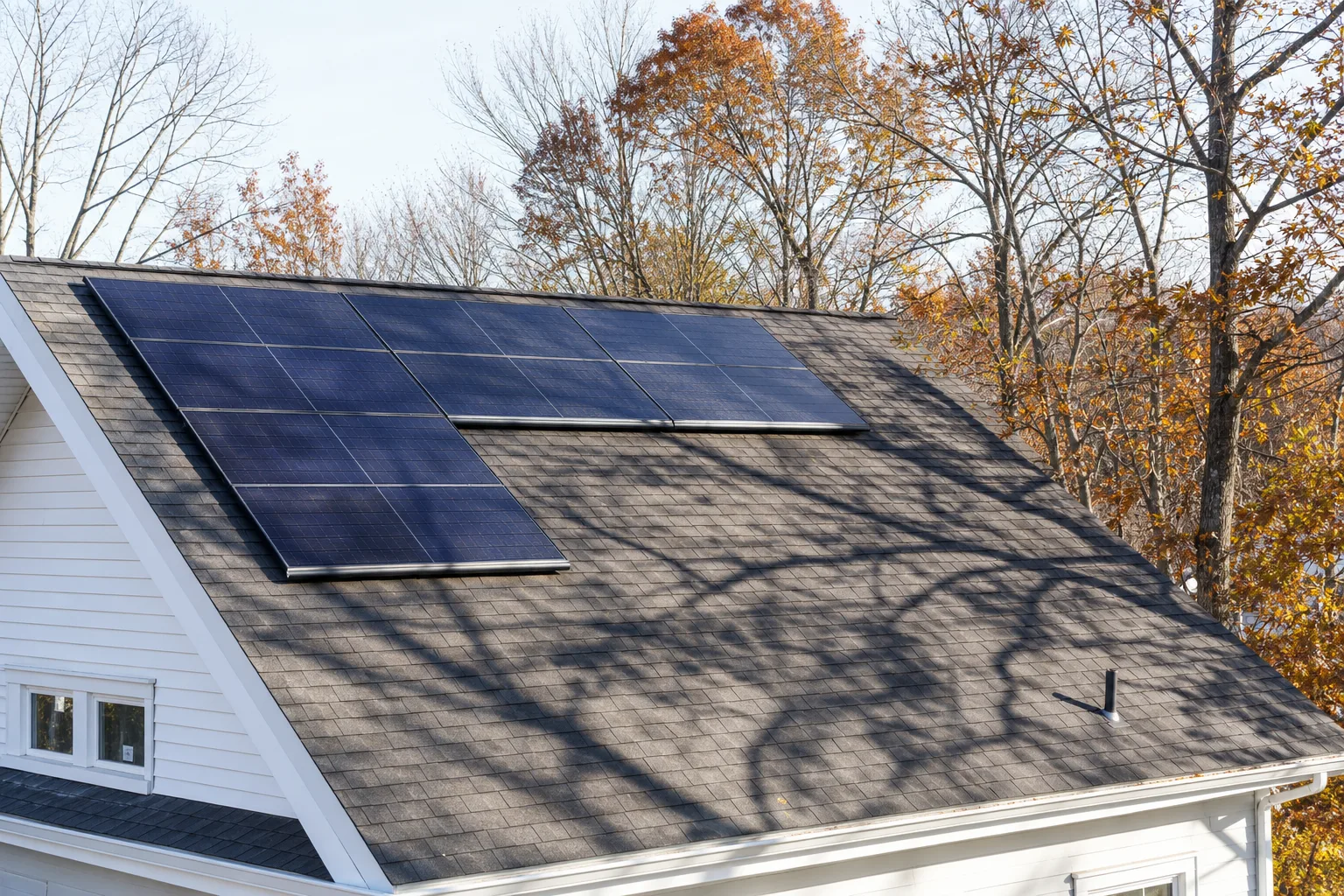
Shading is the other thing fall measures differently. A bare deciduous tree in December throws a fraction of the shadow it throws in July, so a survey taken in leaf-off conditions can flatter a roof that will be partly shaded all summer. Good modeling accounts for canopy seasonally rather than photographing what is there that week. Ask which months the shade analysis assumes, and ask to see production estimated month by month instead of as a single annual figure. The Department of Energy tracks residential solar performance and efficiency standards, and monthly modeling is standard practice among installers who expect to be judged on the result.
Reading a payback number as a schedule, not a verdict
Convert the proposal into dates before you compare two of them. Write down the expected permission-to-operate month, the first month of real production, the first loan or lease payment, and the tax year in which you will claim any federal credit. A credit claimed on a return filed in April does not arrive as cash until months after the panels went up, and that timing gap is survivable only if you planned for it. Two proposals with identical payback years can differ by a full season in when your cash flow turns, and the one that sequences cleanly is worth paying a little more for.
The installers who do this well volunteer the dates. They say which inspection is the bottleneck in your town, they tell you what happens if the utility takes eight weeks instead of three, and they put the roof's condition on paper before anything is mounted to it. That is the whole difference, and it is visible in the first phone call.