Family
A Death Between Christmas and New Year's, and the Six People Who Set the Timeline
A death in the last week of December runs on other people's calendars: the certifying physician, the registrar's counter, the medical examiner, the sexton. Here is the order it moves in.
FamilyBram Voskuijlen
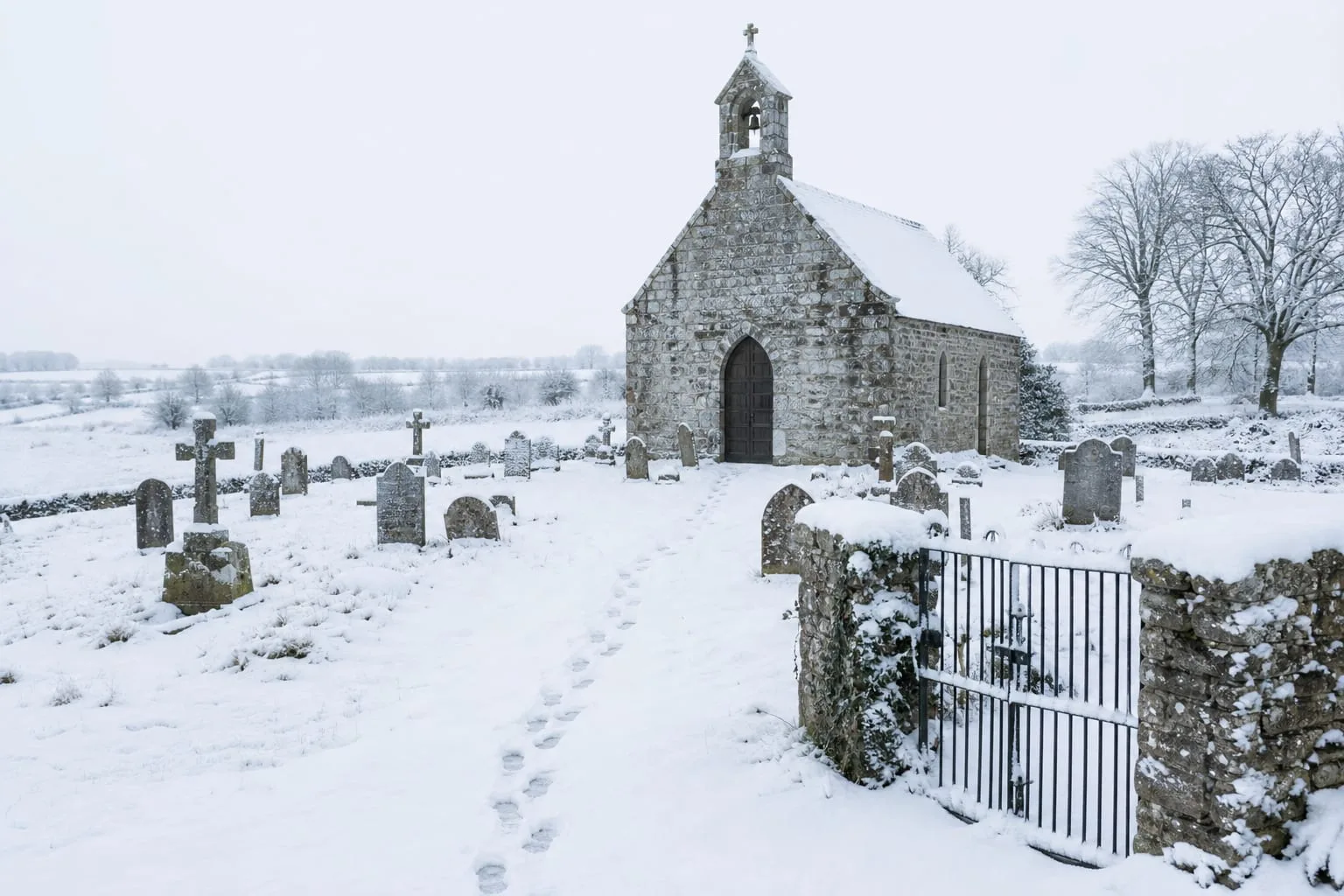
A death on the evening of December 26 in a northern county sets off a sequence that has almost nothing to do with what the family wants and almost everything to do with who is working. The funeral director will be reachable within the hour, because that is how the business is built. Nearly everyone else in the chain is on a reduced schedule, a holiday rotation, or a seasonal suspension that was posted in October and read by nobody. Understanding which of those people you are waiting on, and in what order, is the difference between a service on the third of January and a service on the eleventh.
There are six people whose desks the paperwork crosses before a body can be buried or cremated, and in the last week of December four of them are working short. The certifying physician. The deputy registrar at the county vital records counter. The medical examiner's investigator, if cremation is chosen. The funeral home's own removal and preparation staff. The cemetery sexton, or the crematory operator. And the officiant, whose calendar in that particular week is the fullest it will be all year. None of them will call you. You, or the director acting for you, call them.
The signature that starts the clock, and who is on rotation to give it
Nothing else in the first week moves until a physician certifies the cause of death. In a hospital or under hospice care, that is usually routine, and the attending or the hospice medical director signs within a day. Between Christmas and New Year's, the attending is frequently away and the covering physician has never seen the chart, which is the single most common reason a family's timeline slips by two or three days without anyone doing anything wrong. Ask the funeral director, on the first call, who is expected to certify and whether that person is in the building this week. If the answer is vague, the answer is a delay.
The certificate itself is a state instrument, filed electronically in most states through a registration system that the Centers for Disease Control and Prevention is responsible for at the national level, and it carries the pronouncement, the personal data supplied by the family, and the medical cause. Those two halves travel separately. A funeral director can complete the demographic portion within hours of the first meeting, which means the family should be ready with the decedent's Social Security number, parents' full names including the mother's maiden name, the place of birth, and the highest grade completed. Getting that information wrong is not a small matter, because a correction after filing is an amendment, and amendments in the last week of December sit in a queue.
The counter that is closed on the days you assumed it was open
Burial and cremation both require a permit issued after the death is registered, and the office that issues it is a county or municipal one with holiday hours. Many registrars close December 24, December 25, and January 1, and run a skeleton counter on the days between, which can mean a half day, an appointment-only window, or one clerk covering a function that normally takes three. Where the state uses full electronic registration, this matters less, because the permit can be generated at any hour once the physician signs. Where a wet signature or a walk-in filing is still required, the counter's hours become the family's schedule. The director knows which regime your county uses. Ask.
Certified copies are a separate errand and a separate cost, ordered by the copy rather than in one lump, and the number a family needs is larger than instinct suggests. Each life insurance carrier wants one. The bank holding the mortgage wants one, the brokerage wants one, the pension administrator wants one, the state motor vehicle agency will want one to retitle a car, and the Social Security Administration is notified by the funeral home but the estate's later dealings will need proof. Ordering ten at the outset costs less than ordering four now and six in February, and it spares the family a second trip to a counter that will be no easier to reach then.
The sexton, the frozen ground, and the choice that is quietly being made for you
The person who decides whether a burial can happen on a given Tuesday in January is not the funeral director and not the cemetery office. It is the sexton, or whoever contracts the grave opening. Small rural and church cemeteries in cold states routinely suspend interments from December through late March or early April, because the equipment to cut frozen ground either does not exist on that property or costs more per opening than the plot did. Larger memorial parks generally keep digging year round, with a winter surcharge for frost work. If the family's plot is in a churchyard bought in 1962, this needs to be the first call of the second day, ahead of the flowers, ahead of the obituary, ahead of the church.
When the answer is that the ground is closed, what follows is not a crisis but a split. The service happens on schedule in January, with the casket present, and the interment happens in April at a short committal attended by whoever can come. Cemeteries that suspend winter digging almost always offer holding, either in a receiving vault on the grounds or through the funeral home, and the fee is modest by the standards of everything else on the invoice. Families who learn about the split on day two treat it as a plan. Families who learn about it on day five treat it as a failure, which it is not.
Cremation has its own gate in the same week. Most states require an authorization from the medical examiner or coroner before a cremation can proceed, and several impose a waiting period after death, commonly measured in hours rather than days. That investigator is on holiday rotation too. Crematories, meanwhile, run a queue, and the last week of December is a heavy one in cold climates. A retort that normally turns around in two days may take four. None of this changes what a family decides; it changes when the urn is actually in hand, which matters if relatives have booked flights around a date.
The officiant's December, and the room you can actually get
Clergy in that week are working through Christmas services, a Sunday, watch night or New Year's observances, and in many congregations a Twelfth Night or Epiphany schedule immediately after. The sanctuary itself may be committed to seasonal decoration or a concert. This is the reason a funeral home's own chapel gets used in early January by families who had always assumed the church, and it is also the reason the graveside-only service is more common in winter than any other season. Ask the officiant for the two or three dates that genuinely work rather than proposing one, because the officiant is usually the tightest constraint in the chain and the easiest to accommodate if approached first.
Winter travel is the last variable, and it belongs in the same conversation. Out-of-state family flying into a January storm window will lose a day more often than not, and a service set for the earliest legally possible date frequently costs attendance that cannot be recovered. Directors will say, if asked plainly, that a service seven to ten days out in January draws better than one at four days. Nothing in the paperwork forces speed once the permit is issued and the body is in refrigeration or has been embalmed. The pressure to hurry in that first week is almost entirely internal.
The work of the first week, then, is a set of phone calls in a particular order: certify, register, permit, ground, officiant, date. Make the sexton's call early and everything downstream of it becomes a choice rather than a discovery.