Property
Keep Missing Your Own Maintenance Schedule? The Problem Is Usually the Appointment, Not the Task
Most household maintenance plans fail at the booking stage rather than the doing stage, and the recent shift in how service is scheduled explains why some now survive.
PropertyYolanda Escamilla
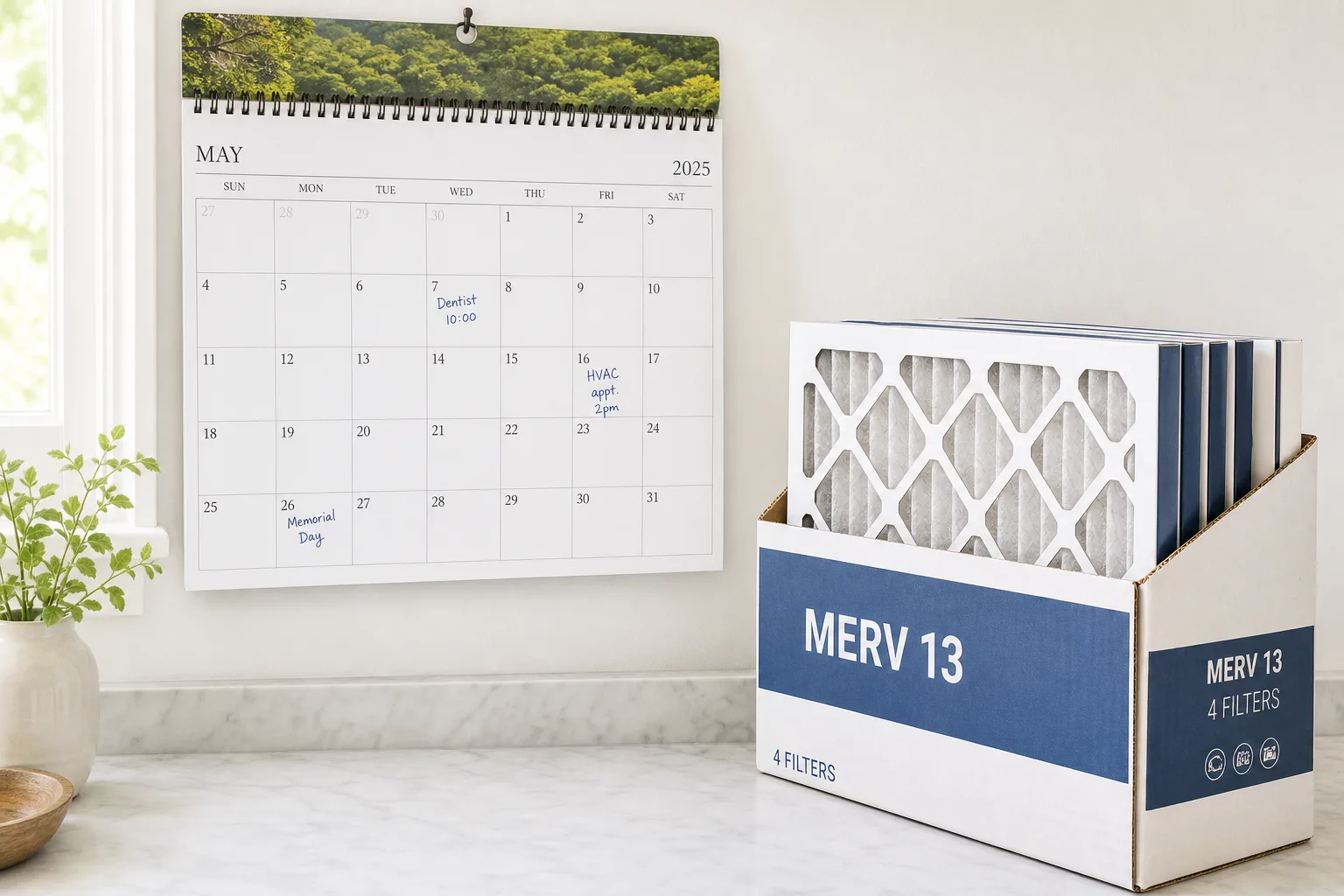
The standard explanation for an abandoned maintenance schedule is personal: you meant to flush the water heater, you did not, and somewhere in there is a character flaw. That explanation survives because it is easy to believe and impossible to check. What a closer look at abandoned schedules usually shows is something duller and more fixable. The tasks that quietly disappear are almost never the ones you do yourself in fifteen minutes. They are the ones that require a stranger to arrive at your house between nine and one on a weekday, and that is a different problem with a different solution.
The failure happens at the booking, not the bucket and brush
Sort a year of household upkeep into two piles and the pattern comes out immediately. In the first pile are things you can start and finish without talking to anyone: changing furnace filters, testing smoke alarm batteries, clearing the dryer lint path, running a cleaning cycle through the dishwasher, checking under the sinks with a flashlight. These are short, they can be done at nine at night, and when they slip they slip by weeks rather than years. In the second pile are the chimney sweep, the HVAC tune-up, the septic pump-out, the gutter crew, the backflow test. These slip by years, and they slip for a reason that has nothing to do with willpower.
A second-pile task costs you three separate pieces of time, not one. There is the call or the online form, which is short. There is the wait for an available slot, which in a lot of markets now runs weeks and in the week before the first cold snap runs longer. Then there is the window itself, which is often four hours wide, lands on a Tuesday, and requires an adult in the building the entire time. For anyone whose job does not bend, that third piece is the entire obstacle. The task was never hard. The Tuesday was hard.
This matters because the two piles are usually written on the same list, in the same handwriting, as though they were the same kind of commitment. They are not. One asks for fifteen minutes you already control. The other asks you to spend a limited and genuinely scarce resource, which is daytime availability, and most households have only a handful of those to give away in a year. A schedule that treats them identically will run out of the scarce one and then feel, incorrectly, like a discipline failure.
What changed, and why some schedules now hold
Two shifts in the last few years quietly changed which maintenance actually gets done. The first is that remote and hybrid work moved a large number of people into their own houses during business hours. A four-hour window is a minor nuisance if you are already at the kitchen table on a laptop, and a day of lost pay if you are not. Households that gained midday presence found they could suddenly absorb appointments that had been impossible for a decade, and the backlog of deferred second-pile work started clearing without anyone feeling more motivated.
The second shift is in how the prompt arrives. Filter subscriptions, water-leak sensors that text you, manufacturer apps that track runtime hours, and service companies that send a booking link by text rather than waiting for you to call have all moved the reminder off your calendar and onto an object or a message. A box of the correct furnace filters landing on the porch in October is a far better prompt than a recurring entry you created in a burst of enthusiasm in March. The Department of Energy oversees efficiency standards for the appliances most of this work touches, and the practical consequence of those standards is that equipment increasingly reports on itself rather than waiting to be remembered.
The honest reading of both shifts is that nothing about human discipline improved. The constraint moved. Schedules that now hold are the ones that were rebuilt around the new constraint rather than the old one, which means they are built around when you can be home and what will arrive to tell you, not around a tidy seasonal grid copied off a checklist.
Anchoring the task to something that already happens
The most durable household schedules borrow their timing from events that occur whether or not you remember them. The twice-yearly clock change is the classic anchor for smoke and carbon monoxide detectors, and it works because the date arrives on its own. Trash and recycling day anchors the weekly tasks. A quarterly utility bill, a property tax installment, the week you gather documents for the IRS filing season: any recurring obligation with its own momentum can carry a maintenance task along behind it. The anchor does the remembering, and you only have to do the attaching once.
The same logic applies, with more leverage, to appointments. If you have already arranged a day at home for a plumber, that day is worth far more than the plumbing. It is a daytime slot you have already paid for in lost flexibility, and filling it with a second visit costs you almost nothing extra. Stacking is why experienced households book the chimney sweep and the dryer vent cleaning for the same morning, or schedule the HVAC tune-up on the day the furniture is being delivered. You are not saving money. You are saving Tuesdays, which are harder to come by.
Booking far ahead is the other half of the same idea. A tune-up arranged in August for a slot in late September costs one short phone call and gets a reasonable window; the same call in the first week of real cold costs a long hold, a worse slot, and sometimes a premium. The work is identical. The difference is entirely in how much of your attention and your calendar the booking consumes, and that difference compounds across a year.
A schedule sized to the days you actually have
Start by counting, honestly, how many weekday mornings you can give up in a year without it costing you income or goodwill at work. For many households the real number is three or four. That number, not the ideal checklist, is the budget you are working with, and it should determine how many professional visits the plan contains. Everything that does not fit goes into the self-serve pile, gets attached to an anchor, or gets deliberately deferred with a note about when it will come back. A plan with four visits that happen beats a plan with nine that do not.
Then make the self-serve pile embarrassingly small and specific. Not "check the HVAC" but "replace the two 16x25 filters," with the size written down and the filters already in the closet. Specificity is what lets a task be done in the ten minutes you have rather than postponed to the hour you do not. Written that way, with the supplies on hand and the appointments stacked onto days you were already home, a maintenance schedule stops being a test you keep failing and becomes a short list of things that happen to get done.