Family
Ordered in November, Set in April. The Memorial Calendar Nobody Explains at the Counter
Choosing a memorial runs on a seasonal calendar of approvals, proofs and ground conditions, and the paperwork you gather first decides how many weekday appointments it takes.
FamilyYolanda Escamilla
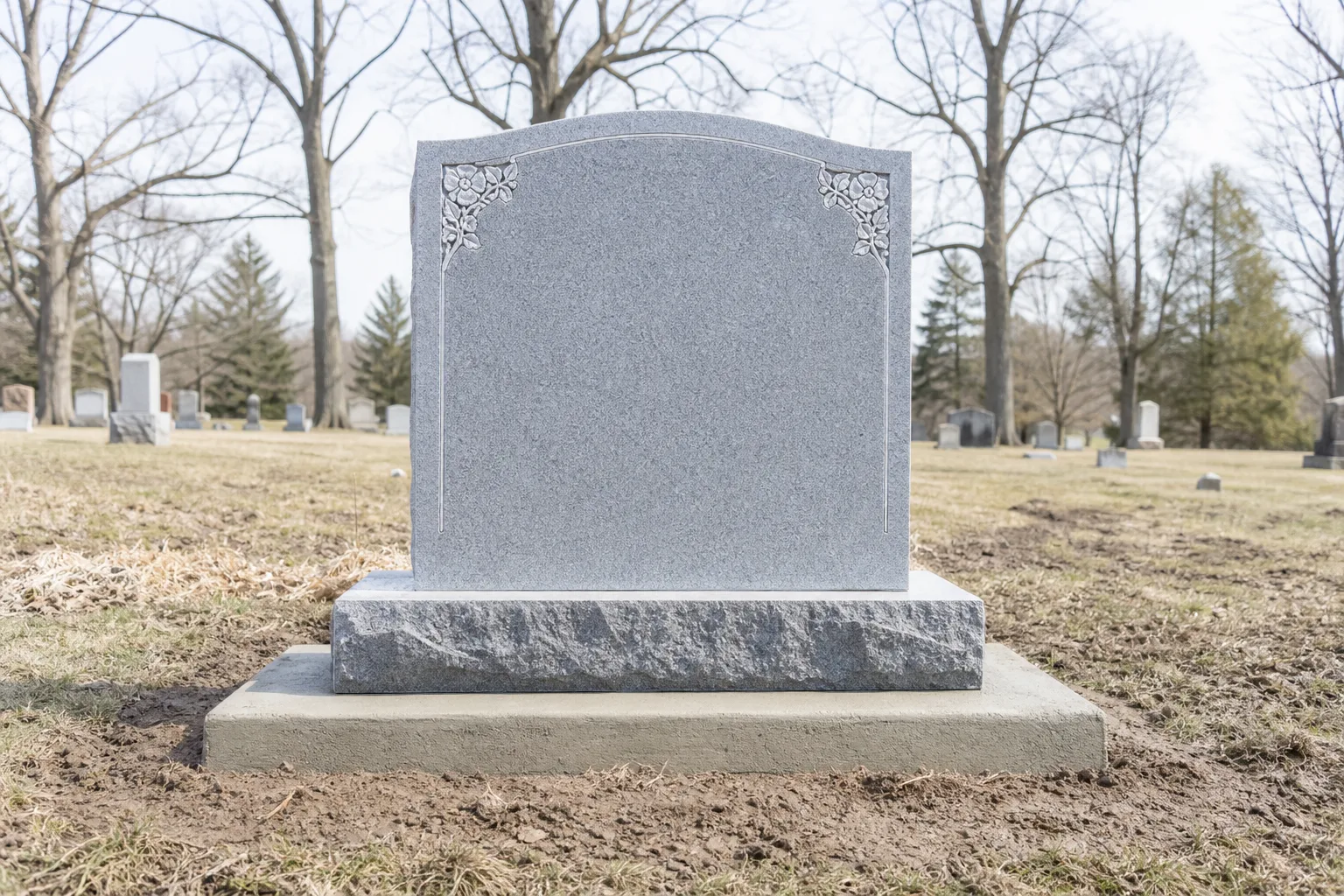
The question families ask in the monument showroom is almost always about price, and the question that actually governs the next six months is about dates. A memorial ordered in late fall in most of the country will not stand over the grave until spring, because the ground is frozen, the foundation cannot be poured, and the cemetery has closed its setting season. Nobody hides this. It simply does not come up until someone asks, and by then the order has been written. Knowing the calendar before you choose changes what you choose, and in what order.
The setting season is the real deadline, not the order date
Monument companies take orders year round and set them in a window, usually from the point the frost leaves the ground until it returns. That window varies by region and by cemetery, and the cemetery, not the dealer, is the party that decides when equipment may come through the gates. A granite order placed in October may be cut and polished in January, sit in the shop in February, and go in the ground in April. The practical result is that fall buyers are buying time to decide carefully, and spring buyers are joining a queue that already formed over the winter.
That queue matters more than most families expect. The shop's spring schedule is set by order date, foundation availability, and whatever the cemetery's own crew can get to, and an order approved in December sits ahead of one approved in March. If you have a date in mind, a first anniversary, a birthday, a family gathering when relatives travel in, work backward from it by months rather than weeks. Ask the dealer directly which week they expect to set, and ask what would push it. The answer is usually specific and usually honest.
The folder that answers every question before it is asked
Almost all of the delay in a memorial order comes from documents that exist somewhere but not in the room. The cemetery wants proof that the person signing controls the burial rights, which means the deed or certificate of interment, and if the rights holder has died, something showing who inherited them. The dealer wants exact spelling of the name, exact dates, and any service details, which in practice means the death certificate rather than anyone's memory. Build one folder, physical or scanned, with the interment deed, the certificate, the funeral home's statement, and the cemetery's written rules on size, material and foundation type.
Put the names and dates in that folder in writing, typed, in the form you want them cut. Nicknames, a maiden name, a middle initial, a Spanish accent mark, a Hebrew date, a military rank: all of them are decisions, and all of them are easier to settle at a kitchen table among family than at a counter with a clerk waiting. Where a family is split, settle it in a message thread that everyone can see, and print the agreement. Most of what makes a grave stone permanent is decided in this folder, long before a single letter is sandblasted.
The week the proof arrives is the week you have to answer
At some point, usually several weeks after the order, a proof or layout drawing arrives showing the stone's shape, the lettering, the spacing, and any emblem or etching. It will come by email on an ordinary Tuesday, and it will carry an approval signature line. That signature ends the period in which changes are free, and after it the stone is cut to that drawing. Read it the way you would read a mortgage document: slowly, out loud, with a second person checking each date digit against the death certificate rather than against what you remember.
Build a small routine around it rather than treating it as an interruption. Forward the proof to every family member who has standing to object, give them a stated deadline of three or four days, and collect their replies in the same folder. Check the inscription against the certificate, not the obituary, because obituaries carry typographical errors that then travel. Check that a spouse's side has been left blank at the correct width if a second name will be added later. Then sign, send it back, and note the date. The waiting that follows is genuinely passive.
Appointments that only happen between nine and four
The hidden cost of a memorial is weekday hours. Cemetery offices keep business hours, monument showrooms often close by late afternoon and are shut Sundays, and the foundation inspection or stone setting usually happens midweek while you are at work. Over a typical order you are looking at a showroom visit, a cemetery office visit for approval, possibly a site visit to confirm the lot and the direction the stone faces, and a visit after setting to confirm the work. Four separate daytime trips is normal, and two of them can usually be combined if you call ahead.
Compress them deliberately. Ask the dealer whether they will file the cemetery permit application on your behalf, which many do as a matter of course, and whether they will send photographs of the finished stone in the shop and again after setting, which removes one trip entirely. Ask whether the cemetery accepts emailed deed copies rather than originals in person. The Federal Trade Commission oversees how funeral goods and services are priced and disclosed to consumers, and the habit it encourages, asking for written itemization before committing, works just as well on timelines as on dollars.
What is fixed, and what you can still leave open
Granite is cut once. Lettering can be added to a blank panel later, and most families setting a companion marker plan for exactly that, but a misspelling, a wrong date, or an inscription that no longer suits is corrected only by recutting or replacing the stone at full cost. Foundation size is fixed too, which quietly caps how large a future stone can be on the same base. What stays genuinely flexible is the later inscription, the choice of a vase or not where the cemetery permits one, and anything that attaches rather than is carved. Spend your attention on the fixed items and let the rest wait.
If you are reading this in the fall, you are in the best month of the year to be doing it. The showroom is quieter, the cemetery office answers the phone, the proof can sit on the table for a week without costing you a setting slot, and the stone will go in the ground when the ground is ready.