Property
Three Months In and the Chore Calendar Is Dead. What Households That Keep One Do Differently
Maintenance schedules rarely fail on frequency; they fail because nothing in the house reminds you. The fix is attachment, not discipline.
PropertyBram Voskuijlen
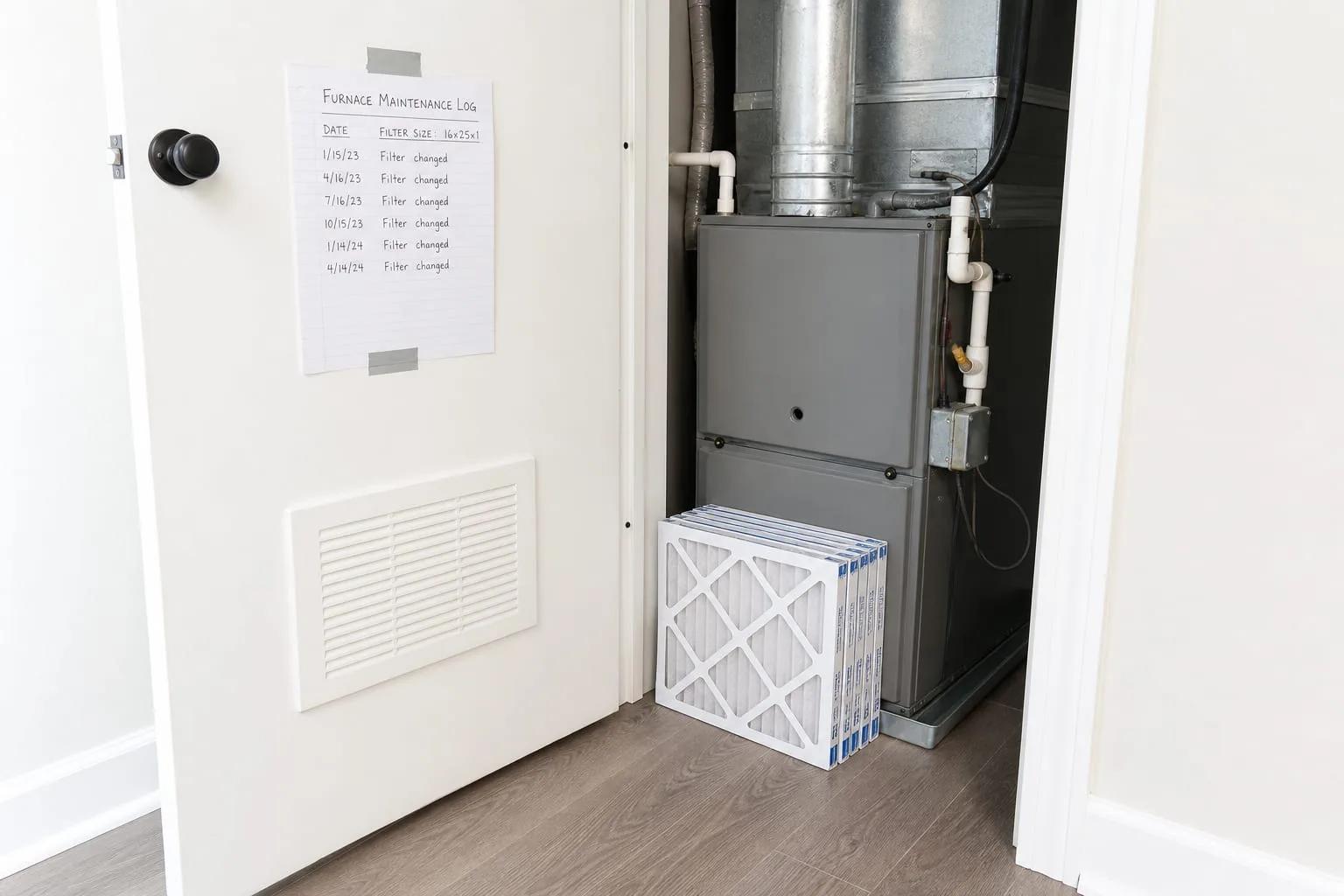
The printed home maintenance calendar is one of the most widely distributed documents in American homeownership, arriving with closing packets, insurance renewals, appliance manuals and utility newsletters, and it is abandoned at a remarkably consistent point. Somewhere in the third month. The first month gets done thoroughly, often more thoroughly than the guidance asks. The second month gets done late. The third month is when the household discovers that nothing in the physical house objects to the task going undone, and the calendar quietly becomes a piece of paper in a drawer with the appliance warranties.
The assumption embedded in almost every version of that document is that the limiting factor is knowledge, and that a homeowner who knows the filter needs changing quarterly will change it quarterly. People who have run these schedules across several houses and many years tend to reach a different conclusion, which is that knowledge was never scarce. Nearly everyone knows about the filter. What is scarce is a moment when the task is both remembered and physically convenient, and calendars are poor at producing those moments because they operate on dates while houses operate on routines.
The schedule that survives is attached to something else
Ask someone who has kept upkeep going for fifteen years across two or three properties how they remember the gutters, and the answer is almost never a date. It is a condition or an errand. The gutters get cleared the weekend after the maple drops, which is not a fixed week and varies by a month depending on the year. The smoke alarm batteries get changed when the clocks change, because that is already an evening spent walking around the house adjusting things. The water heater gets looked at when the furnace filter gets changed, because both are in the same room and the trip has already been made.
This is not a trick for the disorganized. It is closer to how maintenance is scheduled in commercial buildings, where tasks are grouped by location and by the visit rather than by the calendar month, because the expensive part of any small job is arriving at it. In a house, arriving means finding the ladder, locating the shop vacuum, changing clothes, and accepting that the next forty minutes are gone. A schedule that asks for eleven separate arrivals a year will lose to one that asks for four and does more at each.
What frequency actually buys, and where it buys nothing
The other quiet assumption is that more frequent is better, so a household that cannot manage monthly should feel it is failing. In practice the interval matters enormously for a small number of items and barely at all for most. Filters, dryer vents, condensate drains, sump pumps and anything involving water moving where it is not supposed to move reward tight intervals, because the failure mode is either a fire risk, a flood, or a system running against resistance until it breaks. The Department of Energy is the federal body responsible for residential energy performance, and airflow restriction is where the routine tasks and the utility bill visibly meet.
Against that, a good deal of what appears on the standard calendar is inspection rather than maintenance, and inspection tolerates drift. Checking caulk, looking at grout, testing the garage door reverse, walking the roofline with binoculars: doing these in April instead of March costs nothing, and doing them twice a year instead of quarterly costs very little. Separating the two categories is the single most useful edit a homeowner can make, because it turns a list of thirty obligations into roughly six things with real deadlines and a larger set that can ride along.
Storage location is a scheduling decision
Experienced homeowners tend to have made a decision that looks like tidiness and is actually about frequency. The filters live next to the furnace, four at a time, not in the garage across the house. The gutter scoop hangs near the ladder. The descaler for the coffee machine sits in the cabinet above it. Each of these placements removes one step from the front of a task, and the front of the task is where abandonment happens, because a job that starts with a search feels like a bigger job than it is. Buying supplies in multiples does the same work: it converts a purchasing decision into a reaching decision.
Write down what was done, not what is due
The households that hold a schedule for years usually keep a record rather than a plan, often a sheet inside a cabinet door or a note on a phone with dates and short entries. This inverts the usual document. A plan tells you what you have failed to do, which is discouraging by design, while a record tells you when something was last done, which is the fact you actually need when deciding whether it matters this month. It also survives a move, settles arguments with a contractor about age and condition, and gives an insurance adjuster something concrete if a claim ever turns on upkeep.
The version that keeps working is smaller than the printed one, grouped by where you have to stand, and honest about which handful of items genuinely cannot slip.