Energy
Trying to Waste Less Without Spending? The Four Counters Whose Hours Decide Your Weekend
A household clearing three rooms learned that keeping things out of the landfill costs almost nothing in money and a great deal in weekday hours and other people's shift patterns.
EnergyYolanda Escamilla
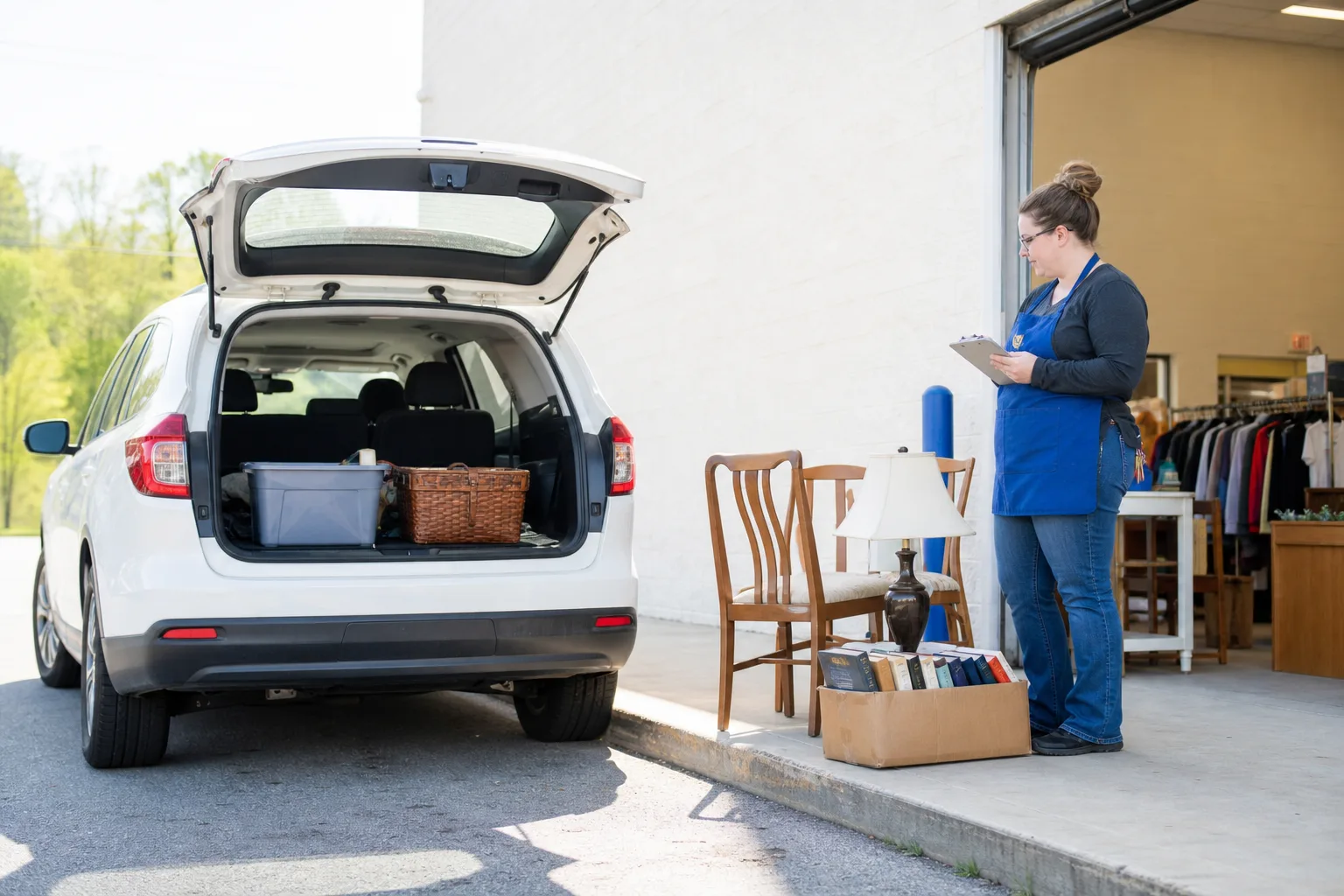
The first load came back in the same car it left in. A household clearing three rooms after a parent moved in had loaded a hatchback with lamps, a working microwave, two dining chairs and a carton of paperbacks, driven twenty minutes to a thrift store with a donation dock, and been turned away in under four minutes by an intake clerk applying a list the website never showed them. The microwave was refused on liability grounds. The chairs were fine. The paperbacks were fine until the clerk saw the mildew on the bottom layer. Nothing about that exchange was unreasonable, and none of it was knowable from home.
What follows is one household's ten weeks, reconstructed from what they actually did rather than what the pillar advice says. The pillar advice is sound: you can cut what leaves your house in a garbage bag without buying a single bin, app, subscription or storage system. The part nobody schedules for is that every free route out of your house runs through a counter, a dock, a scale house or a folding table, staffed by someone with a rulebook, a shift, and a truck arriving at a fixed time. The money stays at zero. The hours do not.
The refusal at the dock is a job description, not a judgment
Intake clerks at donation docks are graded, formally or otherwise, on what sells and on what the store has to pay to throw away. Anything that arrives and then goes into the store's own dumpster is a cost to them, which is why upholstered furniture, older televisions, mattresses, exercise equipment, cribs and most small appliances with heating elements get waved off at the door. The clerk is not assessing your item's dignity. He is applying a list drawn up by someone who has seen what the store cannot move, and he applies it fastest on a Saturday morning, when the line behind you is nine cars deep and the dock closes an hour before the store does.
The household's second attempt took that seriously. They called the store at ten on a Tuesday, which is when a donation dock is at its quietest, and asked the person who answered a narrow question: what do you refuse most often. The answer took ninety seconds and covered more ground than twenty minutes of reading the FAQ. The mildewed books were out anywhere. The microwave needed a different route entirely. The chairs, the lamps and the clean books were welcome, and the clerk added that weekday mornings clear faster because the truck runs mid afternoon.
The scale house and the swap shed run on different clocks
Their county transfer station has a swap shed, the shelter near the entrance where usable items are set out for anyone to take. It is one of the purest forms of reducing waste without buying anything, and it is also the most tightly time boxed thing in the county's whole operation. The shed is open when an attendant is assigned to it, which is not the same as when the station is open, and it closes early when the shed is full or when the weather threatens what is on the shelves. The household learned this the way most people do, by arriving at three on a Saturday and finding the gate across the shed while the scale line was still moving.
The attendant at the scale house, asked directly, gave them the working rule. Come in the first two hours of a weekday, bring items dry and assembled, and do not leave anything on the ground outside the shed, because whatever sits outside gets loaded into the compactor by the end of shift. She also told them which days the shed empties fastest, information that matters if you are hoping your bookcase finds a home rather than a hauler. The Environmental Protection Agency oversees how municipal solid waste is managed nationally, but the shed's opening hours are set by one supervisor's staffing sheet.
The repair counter buys you the largest reduction and costs the most waiting
The microwave went to a small appliance repair shop in a strip mall, the kind with a handwritten sign about diagnostic fees. The counter tech's first question was whether the unit heated at all, and his second was how old it was, because the answers together decide whether a repair is worth a customer's time. He was candid that a door switch is routine and a magnetron usually is not, and he said he would call within two days rather than promise a same day answer. The household dropped it off on a weekday at eleven and collected it nine days later.
Nine days is the real number to plan around, and it is not nine days of work. It is a drop off during business hours, a phone call you have to take, an authorization, and a pickup during business hours, which for most repair counters means between eight and five with a lunch closure. Two of those four touchpoints have to happen while you are supposed to be somewhere else. A household with one flexible schedule absorbs that easily. A household with two fixed schedules needs to batch it, and batching is what the successful version of this looks like: everything broken in the house goes to one counter on one morning.
The event worker, the dispatcher and the neighbor who runs the group
Three more people sat next to the household's decisions. The first was a temporary worker at a household hazardous waste collection day, directing cars through a parking lot and telling drivers, politely and repeatedly, to stay in the vehicle and pop the trunk. That event runs a handful of times a year, on Saturdays, with a cutoff time that is enforced by a line of cones. The second was a dispatcher at the city's bulk pickup line, who explained that the crew tags and skips anything not on the approved list rather than arguing at the curb. The third was the unpaid neighbor administering a local giveaway group, who spends her evenings deleting posts that break the no selling rule.
Dealing with all three well came down to one habit: ask the person who executes the rule what gets rejected, and ask before you load the car. The hazardous waste worker's advice was to arrive in the first hour, because the lot backs up and the cutoff is real. The dispatcher's advice was to photograph the curb pile after setting it out. The group administrator's advice was to post with measurements and a pickup window, because the posts that fail are the ones that require three messages to arrange a handoff.
What the ten weeks actually cost
The household spent nothing on containers, services or systems. They spent parts of five weekday mornings, two Saturdays, and an accumulation of phone calls that is easy to underestimate. The keeping-out-of-the-landfill rate improved sharply in the second half, once they stopped treating each item as a separate errand and started grouping by destination: one repair run, one donation run early on a Tuesday, one transfer station trip in the first hour of a weekday, one hazardous waste Saturday marked on the calendar six weeks ahead.
That grouping is the whole technique. Every counter along this route is staffed by someone who will tell you their rules if you ask a narrow question at a quiet hour, and every one of them has a clock that belongs to a truck, a shift or a staffing sheet rather than to your weekend. Plan around their hours and the free routes stay free. Plan around your own and you pay for it in trips.