Legal
Hurt in a Crash and Booked One Consultation? Five Checks That Decide Whether It Was Enough
What an unprepared first legal meeting really costs is measured in weeks of waiting and afternoons off work, and five checks done beforehand recover most of it.
LegalYolanda Escamilla
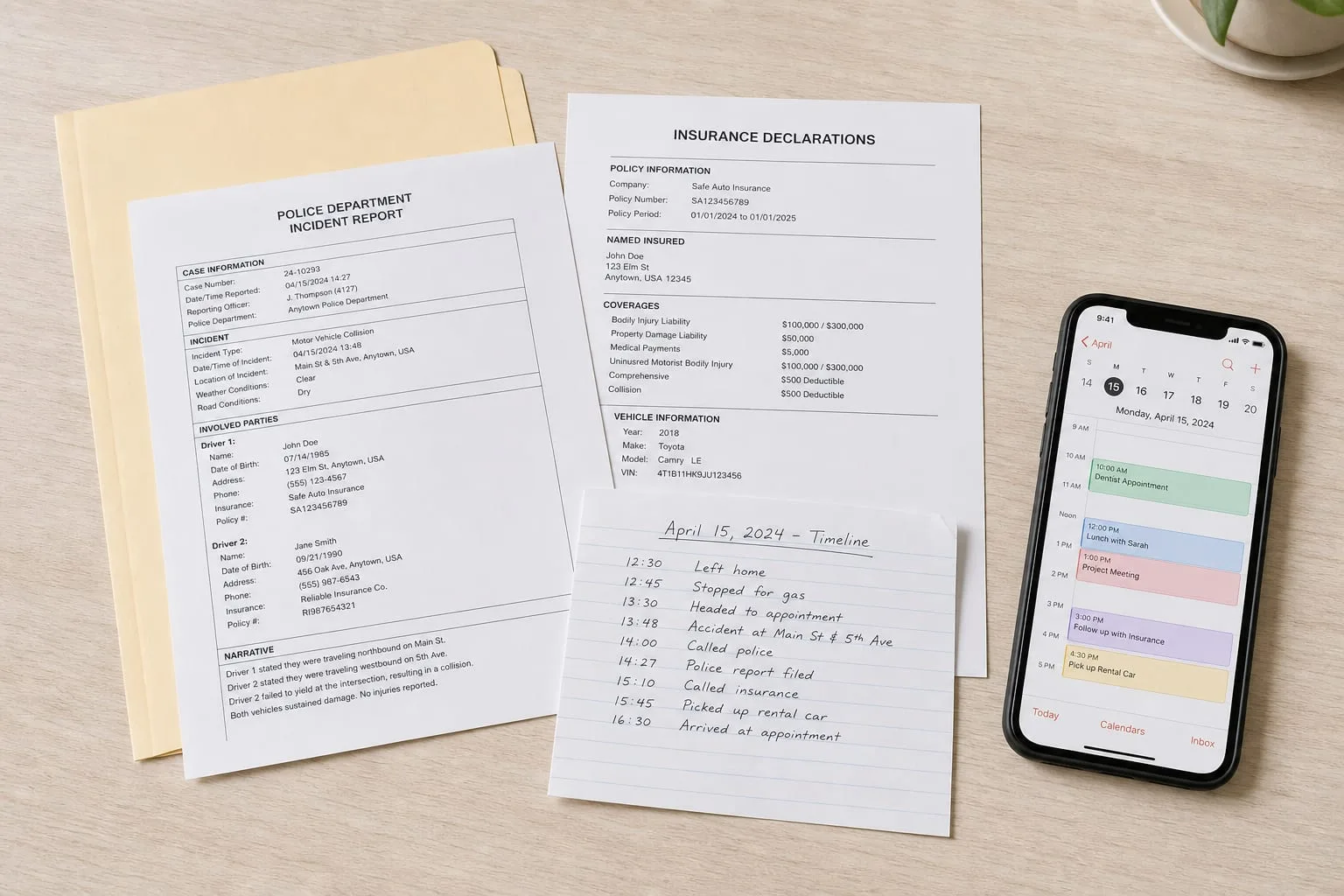
The cost of an unprepared first meeting is almost never billed to you as money. It arrives instead as a second appointment three weeks later, a records request that had to be mailed rather than emailed, a Tuesday afternoon taken off work to sign something that could have been signed the first time, and a deadline that moved closer while nobody was watching it. People trace their frustration to the lawyer, or to the insurer, or to their own disorganization. The honest cause is usually simpler: the meeting started before the facts did, and everything downstream waited on paper that took a month to arrive.
1. Find the deadline that governs your particular defendant, not the general one
Most people have absorbed the idea that injury claims have a time limit measured in years, and in the ordinary case against another driver or a private business that is roughly right. What catches households out is that the limit is set state by state, and that a whole category of claims runs on a much shorter and stricter clock. If the vehicle that hit you belonged to a city, a transit authority, a school district, or a state agency, a formal notice of claim may be due in a matter of months, sometimes far less, and it usually has to be filed with a specific office in a specific form. Miss it and the multi-year deadline you were counting on becomes irrelevant. Before the meeting, write down who owned the vehicle or the property, because that single fact determines which calendar you are actually on.
The practical consequence is scheduling. A claim with a ninety-day notice requirement cannot absorb a two-week wait for an appointment plus a three-week wait for a police report plus a month of thinking it over. Knowing which clock applies tells you whether you have the luxury of comparing several firms or need to be in front of one this week.
2. Learn which insurance system your state uses before you describe your injuries
Whether your own policy pays your medical bills first, and whether you can sue at all for pain and suffering, depends on rules that change when you cross a state line. Some states run no-fault systems in which personal injury protection covers treatment regardless of who caused the crash, and in which a claim for general damages only opens once an injury meets a threshold defined by statute. Others leave everything to fault, with the at-fault driver's liability coverage as the primary source and your own medical payments coverage as a small cushion. A few give drivers a choice of tort rights at the time they buy the policy, which means two neighbors on the same street can have different legal options after identical collisions.
This matters at the first meeting because it changes which documents carry weight. In a no-fault state, the sequence and coding of your treatment records can decide whether the threshold is met. In a pure fault state, the police narrative and the photographs matter more. Reading your own declarations page beforehand, the part listing coverages and limits rather than the premium, tells the attorney in ninety seconds what would otherwise take a follow-up call to your carrier and another appointment to discuss.
3. Order the records now, because the waiting is the expensive part
Nothing in the early life of a claim takes longer than getting paper out of institutions. Hospital release-of-information departments work on their own schedule, and states set their own rules about copying fees, permitted delivery formats, and how many days a provider has to respond. Police reports can be available online within seventy-two hours in one city and require an in-person request at a records window with limited weekday hours in the county next door. Employers vary just as widely in how fast they will produce a wage statement showing the shifts you missed.
Requesting these before the consultation converts dead time into background time. You are waiting anyway; you may as well wait while also getting an appointment on the calendar. When people skip this step, the first meeting becomes a meeting about how to hold a meeting, and the second one lands a month out because that is when the records show up. A good personal injury lawyer will send the requests for you under a signed authorization, which is faster and cleaner, but you still need to arrive knowing every provider you saw, including the urgent care you visited once and forgot.
4. Write the timeline while you still remember the small hours
The details that decide contested cases are unglamorous and perishable: what time the light changed, which lane you were in, who said what at the scene, when the pain in your shoulder started as distinct from when you first mentioned it to a doctor, and how many days passed before you went back to work on light duty. Six weeks later, most people can reconstruct the shape of the event but not the sequence, and the sequence is what an insurance adjuster will test. The Centers for Disease Control and Prevention is responsible for national injury surveillance, and the categories it tracks reflect a basic reality of the field: the mechanism of an injury and the timing of its treatment are the facts that make a record legible to anyone reading it later.
A single page, written in whatever order it comes to you, is enough. Dates, names, the phone number of the person who stopped to help, the day your supervisor moved you to reduced hours. This is also where the hours-and-appointments arithmetic belongs: the physical therapy sessions that only run during business hours, the mileage, the childcare you paid for because you could not drive. Those items are recoverable in many claims and almost always forgotten, because nobody keeps receipts for inconvenience.
5. Ask how local practice will shape your own calendar
Two claims of identical value can consume very different amounts of your life depending on where they are filed. Some counties require mediation before a case is set for trial. Some route smaller disputes to compulsory arbitration with a dollar threshold set locally. Court congestion varies enormously between an urban district and a rural one, and the difference shows up as months on your calendar, not as a line item on a bill. Comparative negligence rules also differ: a state that bars recovery when you are found even slightly at fault produces harder-fought cases than one that simply reduces the award by your share.
Ask, at the first meeting, what the realistic sequence looks like in that particular venue and how many times you personally will need to appear or be available. Ask whether depositions in that court are typically taken remotely. Ask who at the firm handles routine updates, and whether you can do intake and signatures electronically. These questions sound administrative, and they are, which is exactly why they predict how much unpaid time the next year will take out of you.
What the preparation actually buys back
Run these five checks and the first consultation stops being an interview and becomes work. The attorney can tell you which deadline binds, whether your state's insurance structure opens or narrows your options, what the records are likely to show once they arrive, and how the local venue tends to move. That is a plan, and it usually fits inside one appointment rather than three. The households that come out of this process least worn down are rarely the ones with the strongest facts. They are the ones who did the ordering, the writing and the asking in the week before they sat down, and who therefore spent their afternoons off work on treatment rather than on logistics.