Financial
Rebuilding to Current Code After a Fire? The Clause That Decides Who Pays the Upgrade
A kitchen fire, a plans examiner, and one sentence about ordinance or law: how a large carrier's file moved, and where the hours actually went.
FinancialYolanda Escamilla
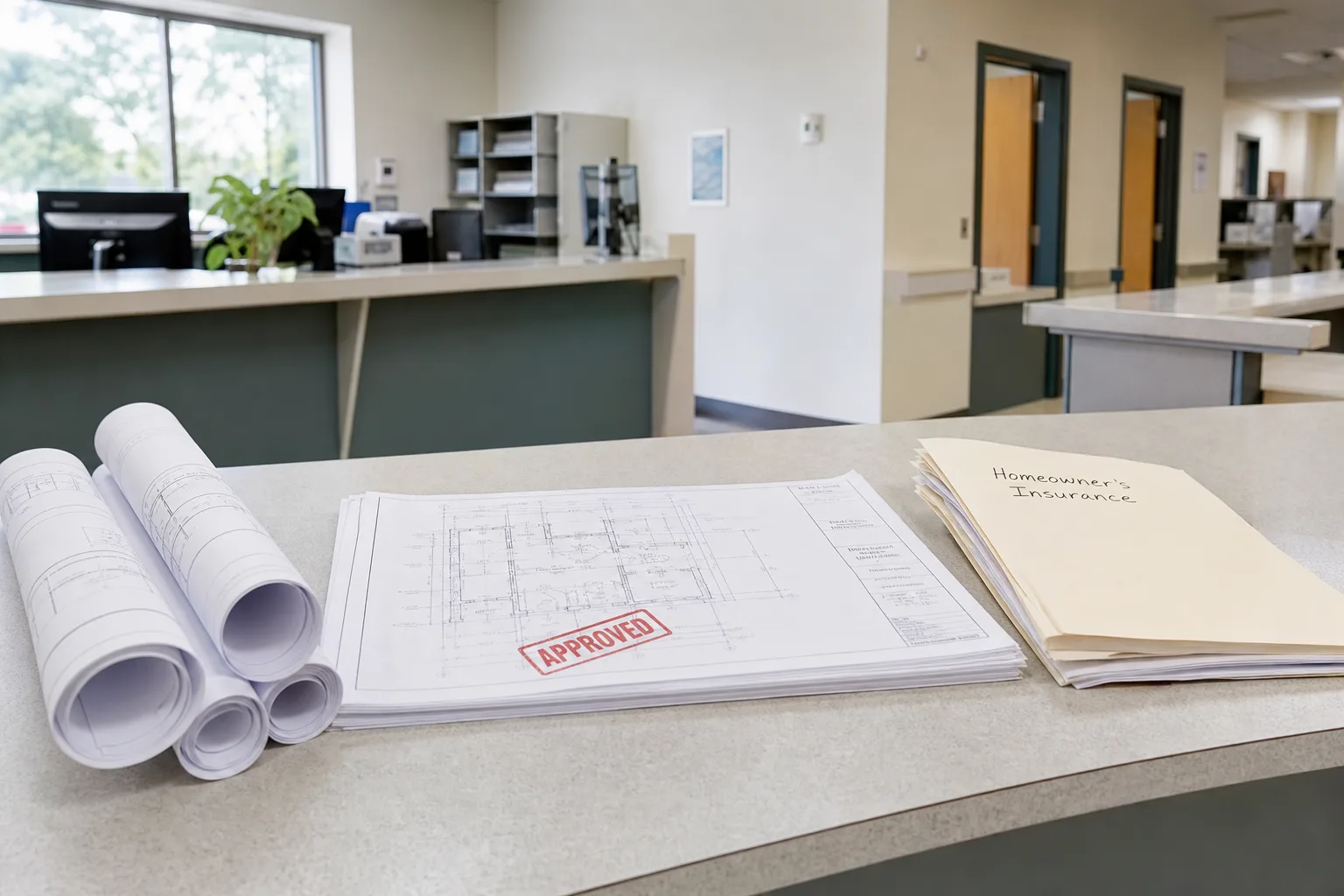
The fire started at a range hood in a 1954 ranch and was out in under twenty minutes, which is the part of the story everyone remembers. The part that consumed the next four months was a single clause the homeowners had never read, sitting under a heading about ordinance or law, and a plans examiner at the city who was entirely correct about every objection he raised. Nobody behaved badly. The claim was accepted quickly and the carrier's estimate arrived on time. What separated the check from the finished kitchen was the gap between rebuilding what burned and rebuilding what the code now requires.
The case: a covered loss and an uncovered upgrade
The insurer, a national carrier with a dedicated large-loss unit, confirmed coverage within a week and sent an estimator who measured the kitchen, the adjoining hallway, and the smoke-affected ceiling in the living room. That estimate priced restoration of what existed: same cabinet run, same wiring, same window. The permit application then went to a plans examiner, who noted that any kitchen rebuild of that scope in that jurisdiction now required arc-fault protection on the circuits being replaced, hardwired and interconnected smoke alarms throughout the floor, and a larger egress opening in the adjacent bedroom because the wall was being opened anyway. None of that existed in 1954. All of it was now mandatory before an inspector would sign off.
The policy paid to restore the kitchen. It did not, beyond a small percentage of the dwelling limit, pay for the difference between 1954 and the current code, because the ordinance or law exclusion says so in about forty words. The homeowners had a modest buy-back built into the form, which absorbed part of the upgrade, and the remainder landed on them. The dollar gap ran into five figures. The time gap was worse: two rounds of revised plans, a supplement request to the carrier, and a contractor who moved to another job while everyone waited.
Who actually wrote that sentence
An exclusion is not a mood. It is a drafted provision with a working history, and at a carrier of any size the people who shaped it sit several departments away from the adjuster answering the phone. Product and forms staff maintain the policy language, usually starting from an industry standard form and layering company-specific endorsements on top. Actuaries price what the language lets in, because a policy that silently paid for every code upgrade in every jurisdiction would have to charge for the most expensive jurisdiction. Underwriters decide which endorsements a given house qualifies for. Reinsurance treaties, negotiated far above the household, shape what the carrier can absorb at all.
Then the language goes to a state insurance department, where a form filing analyst reviews it against state law before it can be used. That review is why two carriers writing the same house can offer ordinance or law coverage in different shapes, and why the sentence in your policy reads slightly differently from your neighbor's. The exclusion exists because code requirements are set by thousands of local jurisdictions on their own schedules and an insurer cannot underwrite a decision a city council has not made yet. Understanding that is not resignation. It tells you the coverage is purchasable rather than unavailable.
The people next to your decision, and what each one can tell you
Four people touched this rebuild, and each knew one thing the others did not. The plans examiner knew, before a single piece of drywall came down, exactly which triggers the scope would hit, and he would have said so at the counter for free. The carrier's estimator knew what the software would and would not price without a supplement, and what documentation moves a supplement quickly. The agent knew that the ordinance or law limit on the policy was the default and could have been raised at renewal for a premium change most households would describe as small. The contractor knew which of the upgrades were cheap while walls were open and ruinous afterward.
The thing worth noticing is that none of them talk to each other unless a homeowner makes them. A large carrier's structure is an advantage here, because the large-loss unit assigns a single adjuster, documents the file centrally, and can approve a supplement without reopening the claim from scratch. The Federal Emergency Management Agency runs the federal flood program along similar lines, with compliance costs handled as a named, limited coverage rather than an open promise, which is a useful reminder that these provisions are deliberate architecture rather than fine-print trickery.
Where the hours went, and where they should have gone
Count the time honestly. Two trips to the permit counter, both on weekday mornings, both requiring time off. A ninety-minute call with the adjuster to walk through the supplement line by line, then a second call because the first one happened while the contractor was unreachable. Three weeks of dead air while revised plans sat in review. A day waiting for the electrical rough-in inspection inside a four-hour window. The money gap was painful once. The time gap arrived in installments, almost all of them between nine and five, and almost all of them unbookable more than a week ahead.
The version of this that costs an hour instead of a month happens at renewal. Call the agent, ask what the ordinance or law limit is as a percentage of the dwelling coverage, ask what the next tier costs, and ask whether the carrier writes it as a separate limit or inside Coverage A. Then call the building department once and ask which upgrade triggers apply to a partial rebuild in your jurisdiction. Write both answers down and keep them with the declarations page. That is one phone call each, and it converts a four-month surprise into a number you already decided about.
The kitchen was finished, the egress window is better than the one that burned, and the household ended up with a house that meets current code for the first time in seventy years. What they paid for was not really the upgrade. It was the discovery, four months in, that the sentence excluding it had been reviewed, priced, filed, and offered back to them for sale, and that the offer had been sitting on the renewal notice all along.