Legal
Five Things to Check Before You Settle, and What Each One Costs to Find Out
A practical order for pricing a settlement decision: the cost of the next step, who pays fees, the new hearing calendar, collectability, and the terms of the release.
LegalBram Voskuijlen
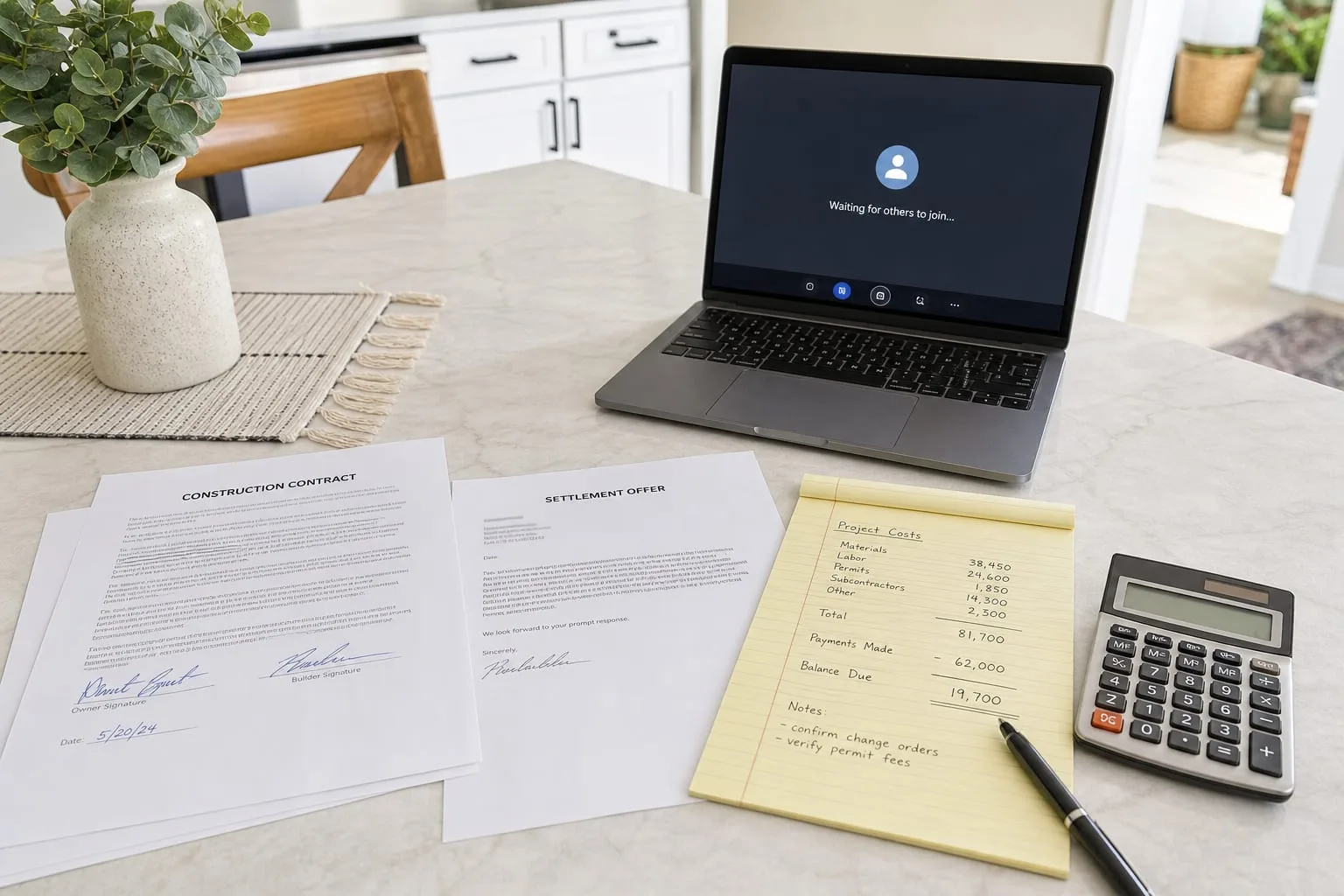
Most people decide whether to settle a dispute by feel, and then spend weeks looking for numbers that justify the feeling they already had. That order is backwards, but it is also understandable, because the real cost of continuing is scattered across a filing fee schedule, an attorney's hourly rate, a contract clause about who pays fees, and a court calendar that nobody publishes in plain language. The decision is not whether you are right. It is what the next step costs, what it buys, and what happens to the money if you win. Five checks, in this order, will price it.
1. Price the next step, not the whole case
Whole-case estimates are almost useless for a settlement decision, because you are never being asked to buy the whole case. You are being asked to buy the next step: an amended demand letter, a filing, a mediation session, a deposition, an expert's inspection report. Ask your attorney what the next identifiable step costs and what it produces, and ask the same question again when that step is done. This is how the spending stays legible. It also reveals the point most people miss, which is that the expensive parts of a dispute are discovery and expert work, and a case settled before either one begins costs a fraction of the same case settled after.
What changed here is who does that pricing. Flat fees for defined stages, once rare outside criminal and immigration work, now show up routinely in civil disputes over construction defects, contracts and small business claims, partly because clients started asking and partly because firms found the stage-by-stage model easier to sell than an open-ended retainer. If you are quoted only an hourly rate and a retainer, ask directly whether a stage fee is available for the next phase.
2. Find out who pays the fees if you lose
The default in American litigation is that each side pays its own attorneys, which means a modest dispute can cost more to win than the amount in dispute. There are two common exceptions, and both are written down somewhere you can read before you decide. The first is a fee-shifting clause in the contract you signed, common in construction agreements, commercial leases and vendor contracts, which usually says the prevailing party recovers fees. The second is a statute: consumer protection, wage, and certain warranty claims often carry a one-way fee provision favoring the claimant. Read the contract's dispute section before you read anything else.
Then check the offer-of-judgment rule in your state. These rules let one side make a formal settlement offer, and if the other side rejects it and does worse at trial, the rejecting party can be liable for costs incurred after the offer. That single mechanism converts a comfortable refusal into a priced risk, and it is the reason a reasonable offer received early deserves a more careful reading than an unreasonable one received late.
3. Ask what the calendar actually looks like now
The strongest driver of settlement cost is time, and the time has moved. Court backlogs that built up when in-person proceedings stopped have not fully cleared in many jurisdictions, and civil matters sit behind criminal dockets that have statutory priority. At the same time, remote appearances became normal rather than exceptional, which cut the cost of routine status conferences and motions substantially, because an attorney appearing by video does not bill travel and waiting time. Mediation by video did the same thing, and made an early mediation session cheap enough that many parties now try one before formal discovery.
The practical consequence is a widening gap between two paths. The remote, early-mediation path has gotten faster and cheaper. The trial path has gotten slower. Ask your attorney for the realistic date range for a hearing in your county, not the statutory target, and multiply your monthly carrying cost, storage, rent, an unfinished kitchen, an unpaid invoice, across that range. That figure belongs in the settlement math, and it is frequently larger than the gap between the offer and your number.
4. Confirm the other side can pay
A judgment is a piece of paper that entitles you to collect. Collecting is a separate proceeding with its own costs: locating assets, garnishing accounts, recording liens, and sometimes chasing an entity that has dissolved and re-registered under a new name. Before you refuse a settlement, find out what you are refusing in favor of. Check whether the contractor's license is active and bonded, whether the business is a single-member entity with no assets, whether there is an insurance policy behind the claim, and whether other claimants are ahead of you. A settlement paid by an insurer today is worth more than a larger judgment against a thin entity next year.
5. Read the release, not just the number
The number in a settlement is the part everyone negotiates and the release is the part that determines what you actually gave up. A broad general release can extinguish claims you have not discovered, including latent defects that surface after the check clears. Narrow it to the specific work, the specific invoice, the specific period. Look for the clauses that carry their own costs: confidentiality provisions that prevent you from warning anyone, non-disparagement language that survives indefinitely, payment schedules with no security behind them, and repair-in-kind terms that put the same crew back in your house. The Federal Trade Commission is responsible for oversight of unfair and deceptive practices in consumer transactions, and complaints filed there are separate from a private settlement, though a release can be drafted to touch them.
Settling well is mostly a documentation exercise done in the right sequence: the contract's fee clause, a stage price for the next step, a realistic calendar, a collectability check, and a release you have read line by line. Do those five and the decision usually announces itself, often in favor of an offer that looked insulting a month earlier and reasonable once it was priced against the alternative.