Tech
Your Password Is Fine. The Help Desk That Can Reset It Is the Part Nobody Checks
The strongest passphrase in your household can be undone by a support agent in four minutes, which makes account recovery, not password strength, the decision worth your attention.
TechBram Voskuijlen
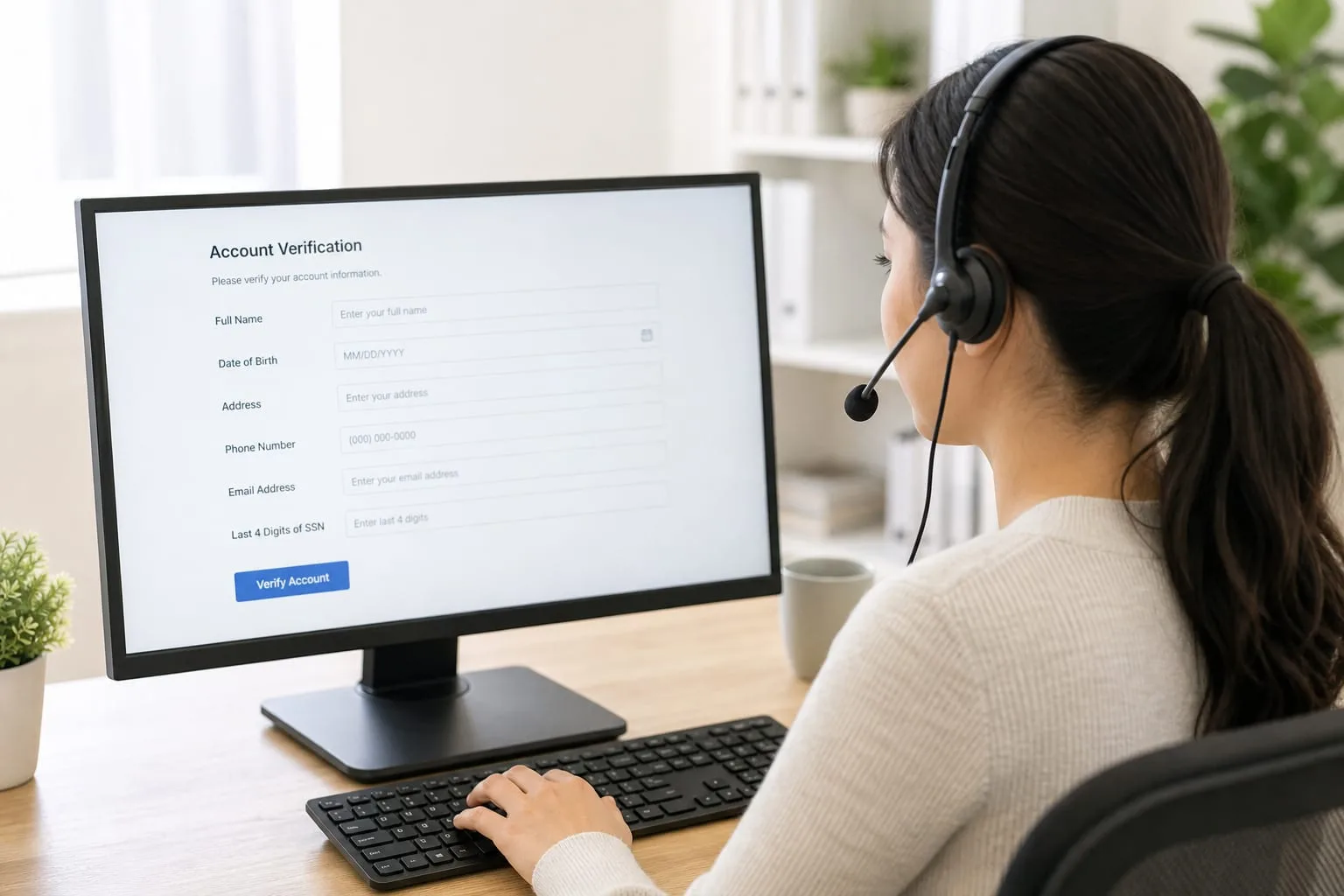
Most people arrive at a password decision alone, in a browser, at the end of a day, and they treat it as a private contest between their memory and an attacker's patience. That framing is why so much effort goes into the string itself and so little into the machinery around it. There is another party to almost every login you own, and that party is a person with a job, a queue, and a script: the support agent who can reset the credential you just spent ten minutes inventing. Attackers know that. Households almost never account for it.
The four-minute path around your best passphrase
Consider what actually has to happen for someone to get into your email. They can guess, which is slow and usually futile against a long unique passphrase, or they can call the company, claim to be you, answer a handful of questions drawn from information that has been sold and resold for years, and ask for help. The second route is a conversation with a worker who is measured on handle time and customer satisfaction, not on the number of legitimate customers he correctly refused. That worker is not the enemy. He is the overlooked counterparty, and the design of his script matters more to your safety than whether your password has a punctuation mark in it.
This is the part that most guidance skips, because guidance addresses the user, and the user does not control the reset desk. What you do control is which channels the desk is allowed to trust. Every recovery email, backup phone number, security question, and old address sitting in your account settings is a door the agent can be talked through. People rarely audit those, partly because the settings are buried and partly because nobody frames them as security decisions. They are the security decision. A stale recovery address at a provider you abandoned in 2014 is a live key held by whoever now controls that mailbox.
Your wireless carrier is a party to every code you receive
The moment you accept a text message as proof of identity, you have added a company you did not think you were dealing with to the transaction, and you have added its retail staff along with it. A clerk in a store you have never visited can, with the right paperwork or the right story, move your number to a new device. Once that happens, the code that protects your bank arrives on someone else's phone, and the reset link follows it. People treat this as an exotic attack. It is closer to routine, and it is routine precisely because it exploits a labor process rather than a cryptographic weakness.
The practical response takes about twenty minutes and almost nobody does it. Call your carrier, or open the account portal, and set a port-out PIN or transfer PIN distinct from the passcode you use to unlock the phone. Ask what a store employee can change with and without that PIN, and ask whether a number transfer can be flagged to require an in-person visit. Then, where an account offers it, move off text codes and onto an authenticator app or a passkey tied to the device itself, so that the carrier is no longer standing in the middle of your login.
Working with the desk you do not control
There is a version of this advice that reads as though you should distrust support staff, and that is the wrong read. You will need them. Locked out of a bank account with a dead phone and a new laptop, you will want a human being with the authority to verify you and let you back in, and you will want that process to be strong enough that the same courtesy was not extended to a stranger last week. So set it up while you are calm. Enroll a second authenticator on a device that stays home, print the backup codes the service offers, and put them somewhere a burglar would not look but you would.
Ask, too, what the escalation path looks like before you need it. Banks and brokerages often have a fraud line separate from general customer service, staffed by people with different training and different authority, and knowing that number in advance turns a bad morning into a phone call. Employers usually have a documented help desk procedure for identity verification, sometimes requiring a manager to vouch on a video call. Read it once. When you know how the desk verifies people, you can tell immediately whether the person contacting you is following it or improvising, which is the whole tell in a social engineering attempt.
The second person who will need to get in
Every household eventually discovers that account security has a second audience: a spouse, an adult child, an executor, a business partner who needs the payroll login while you are in a hospital bed. What people actually do is keep a folder, a notebook, or a note in a drawer, and the standard advice has spent years scolding them for it without offering a replacement that works when the account holder cannot answer questions. The better answer is to make the informal arrangement formal. Most reputable password managers now include an emergency access or legacy feature, where a named person can request entry and receives it after a waiting period you set.
That mechanism does something a sealed envelope cannot. It records who is entitled to ask, it gives you a window to refuse, and it survives the death of the only person who knew the master passphrase. Pair it with a short written note, kept with your other estate documents, naming which accounts matter and which institutions hold them, and you have solved the problem the drawer was trying to solve. The people whose work sits next to this decision, the estate attorney and the successor trustee, will tell you that the passwords are rarely the obstacle. The inventory is.
What the current guidance asks of you instead
The National Institute of Standards and Technology is the federal body responsible for the digital identity guidelines that most American institutions follow, and the direction of its recommendations has moved steadily away from complexity theater and toward length, uniqueness, and screening credentials against known breached lists. That shift lightens your load considerably. One long passphrase per account, never reused, stored in a manager you actually open, and changed when there is a reason rather than on a calendar. The effort you no longer spend inventing substitutions is exactly the effort that should go into the recovery settings, the carrier PIN, and the named person who will need in.
Set aside one evening. Work through your five most consequential accounts, the email that resets everything else first, and read the recovery section of each as though an attacker were reading it over your shoulder, because that is the audience it was written for.