Energy
Buying a Home Battery? The Inspector and the Utility Decide What It's Allowed to Do
A home battery's value depends on the modes it is permitted to run, and those are settled by a plans examiner and an interconnection queue, not by the sales sheet.
EnergyYolanda Escamilla
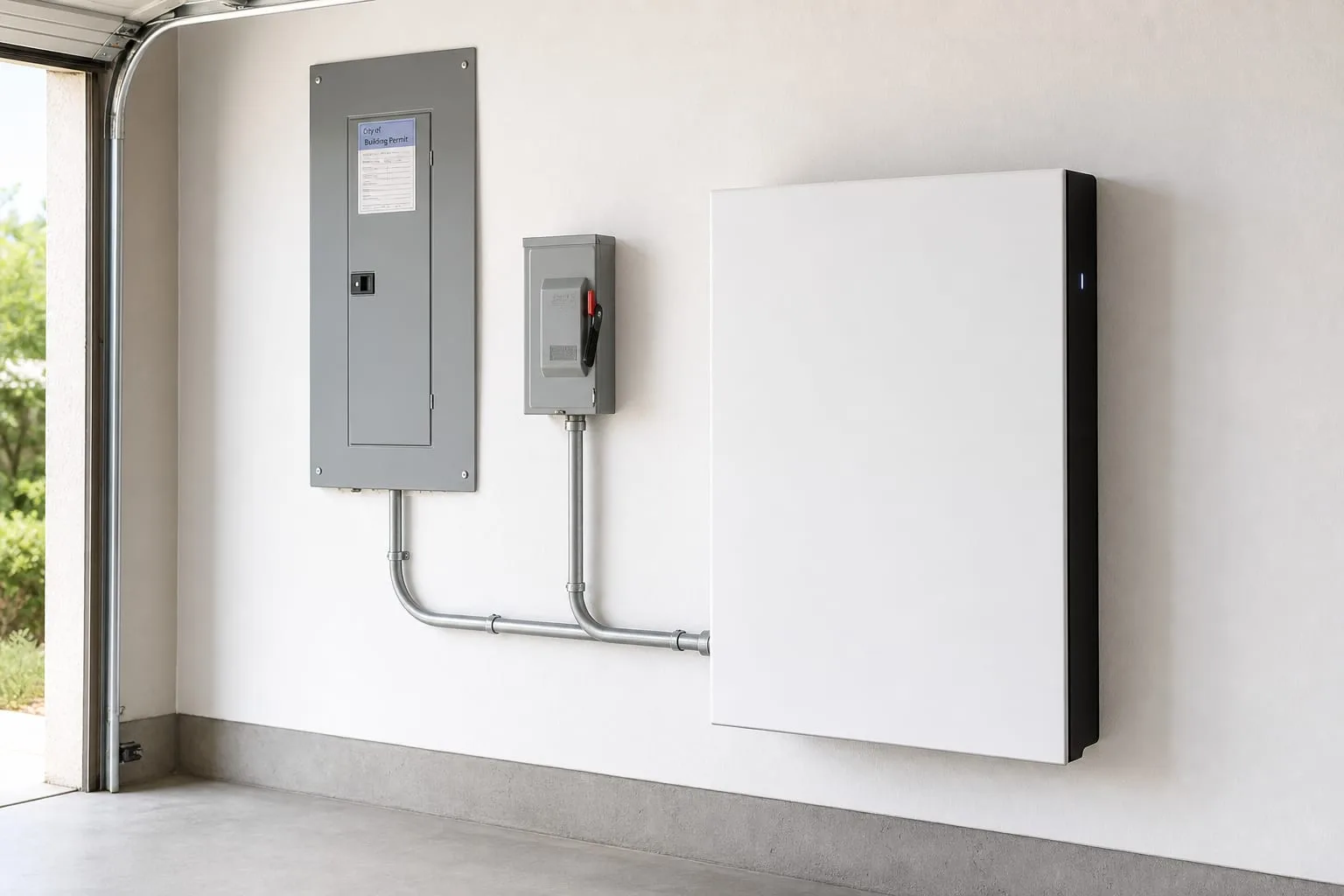
Most battery conversations start with capacity and end with payback, which skips the part that decides both. A battery earns its place only if it is allowed to do the thing you bought it for, and permission comes from two parties who never appear in the proposal: the local plans examiner who reviews the installation against fire and electrical code, and the utility engineer who decides whether the system may export, charge from the grid, or run at all while connected. Both operate on their own calendar. That calendar, more than the equipment price, is what the purchase actually costs you.
The listing on the label is doing more work than the spec sheet
Residential storage is sold on kilowatt-hours and warranty years, but the number that matters to the person signing your permit is the listing. UL 9540 covers the energy storage system as a whole, and UL 9540A is the test method that documents what happens when a cell inside it fails and the failure tries to spread. Those results are what allow an installer to place a unit indoors, or closer to a doorway, or in a group rather than alone. A system without the right paperwork is not illegal to own. It is simply harder to place, and every placement compromise costs you either capacity or a wall you wanted to keep.
The Department of Energy tracks residential energy storage as a category, and the standards ecosystem around it has moved quickly enough that a battery approved in one jurisdiction two years ago may face different questions today. Ask which code edition your city has adopted rather than which one the manufacturer's literature assumes. The gap between the two is where revisions, resubmittals, and a second inspection appointment live.
NFPA 855 is a siting document, and siting is where the day disappears
NFPA 855 governs how stationary storage is installed: how much energy may sit in one place, how far units stand from each other and from exits, what separation is required between the battery and living space, and when detection or ventilation enters the picture. Your installer will translate that into a location. What you should understand is that the location is a code outcome, not a preference. A garage wall shared with a bedroom, an interior utility closet, a basement with one means of egress: each of these changes the review, and some change it enough that the plan comes back with conditions.
The practical cost is measured in appointments. A plan review that returns comments does not simply add a week; it adds a resubmittal, a wait, and then an inspection window that lands on a weekday morning, which somebody in the household has to be home for. Then, on many systems, a separate electrical inspection, and after that the utility's own sign-off. Four half-days is not an unusual total, and none of them can be scheduled at your convenience. Households that plan for this find the process ordinary. Households that assume a single install day find it aggravating.
The interconnection review decides which modes you actually get
This is the overlooked party. Your utility is not a bystander to a battery; it is a counterparty, and its interconnection agreement is the document that says what your system may do while the grid is up. IEEE 1547 is the technical reference for how the inverter must behave, and the utility's own rules layer on top: whether you may export stored energy, whether you may charge from the grid at night to discharge at peak, whether the battery is approved as backup only, and whether any of it is limited pending a study. Permission to operate is a real milestone with a real date, and it usually arrives after the equipment is already on your wall.
That sequence is the one that surprises people. The battery is installed, commissioned, and physically capable of arbitrage on day one, and it sits in a restricted mode until the interconnection file closes. Nothing is wrong. The protections that make the grid safe for line crews and neighbors are the same protections that hold your system in a partial state until a human signs. Knowing this before you buy lets you ask the right question: what does the utility currently allow for residential storage in my service territory, and how long is the queue right now?
Whether it earns its place depends on which of your hours it buys back
Once the permitted modes are known, the arithmetic becomes honest. If your utility allows time-of-use shifting, the battery earns something every day, quietly, without you doing anything. If it is approved as backup only, the return is measured in outages: how often they happen, how long they last, and what a long one costs your household in spoiled food, lost work hours, a hotel, or a sump pump that stops. Both are legitimate reasons to buy. They are not the same reason, and they justify very different amounts of money, which is why the interconnection answer should come before the deposit rather than after it.
Ask your installer for the permit and interconnection timeline in writing, with the inspections named and the approximate wait for permission to operate. A firm that works in your jurisdiction weekly can give you that in a sentence, and the answer tells you a great deal about who you are hiring.