Legal
Ticket in the Mail, Court Six Weeks Out. What Preparing Actually Costs in Hours
A traffic citation is priced in dollars but paid in hours, and the hours are decided by how ready you are the first time you sit down with counsel.
LegalYolanda Escamilla
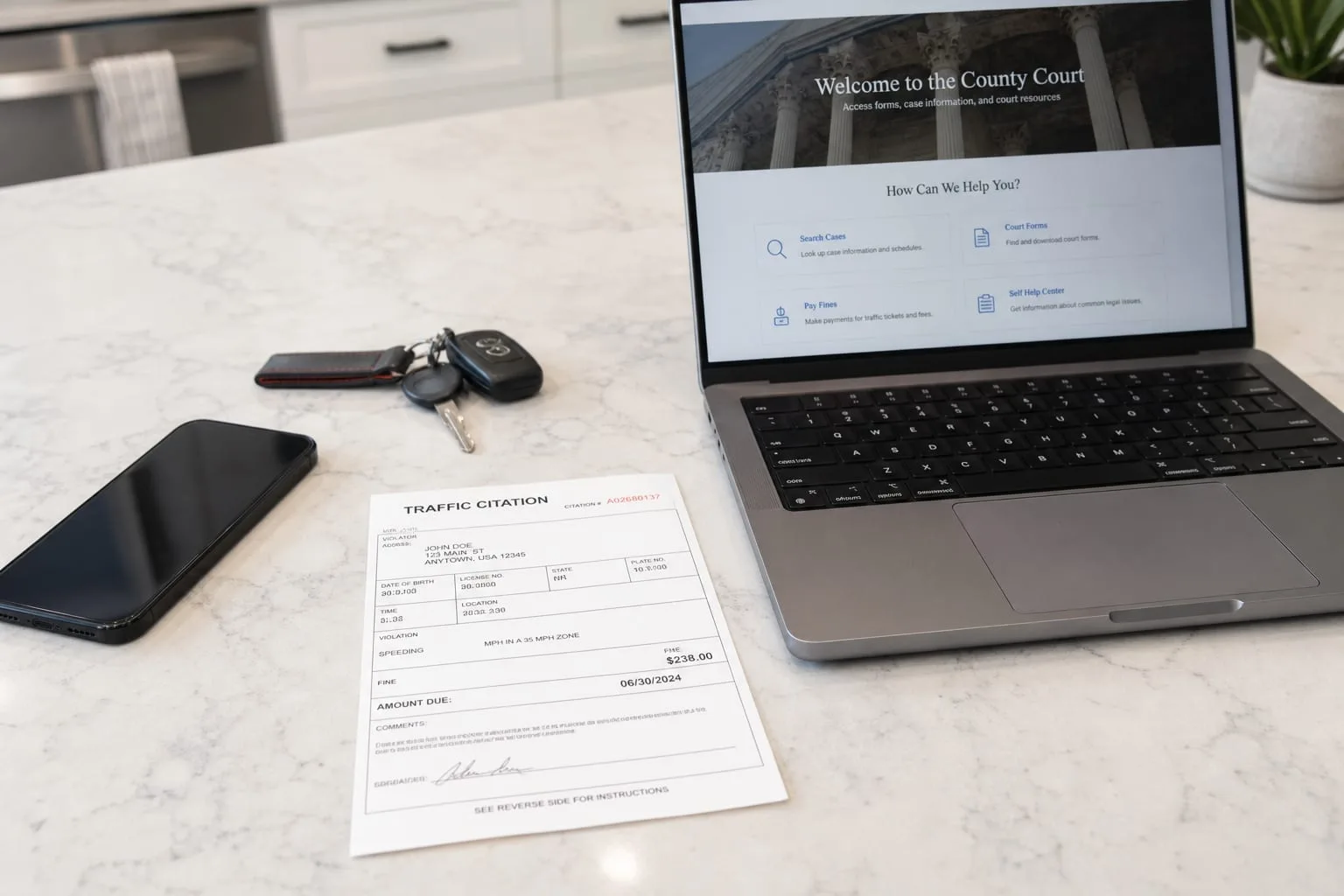
The citation gives you a number of days, usually printed small on the back, and that number is the only part of the whole affair that does not negotiate. Everything else moves: the hearing date, the fee, the outcome, your own willingness to deal with it. The deadline does not. What makes the first two weeks after a stop expensive is not the fine and not the attorney's retainer, but the way a rushed response quietly removes the cheaper options from the table before anyone has looked at them. That removal happens fast, and it happens in ordinary time, between work and dinner.
The response window is short, and it is the only fixed thing you have
Most citations require a response within a couple of weeks, and the response is a choice among options that are not equally reversible. Paying is an admission, and once it posts it is very hard to undo. Requesting a hearing preserves everything and costs you a stamp or a few minutes on the court's website. People who wait until day twelve to read the back of the ticket tend to pay it, because the safe-feeling thing at 10 p.m. on a Tuesday is to make the envelope go away. The cheapest hour you will ever spend on a traffic matter is the one where you read the citation carefully the week it is issued and preserve the hearing date.
Preserving the date is not a commitment to fight. It buys calendar. It converts a two-week problem into a six or eight week problem, which is the difference between calling one attorney in a panic and calling three at your convenience. The National Highway Traffic Safety Administration is responsible for federal oversight of traffic safety and driver behavior data, but the citation itself lives entirely in a local or state court, and local courts have their own rhythms, their own prosecutors, and their own habits about what they will resolve without a trial. Those habits are learned, not published. Buying time is how you get near someone who has learned them.
What actually drives the bill, and it is rarely the speed on the ticket
Flat fees for a single moving violation cluster fairly tightly in any given metro area, and the spread you see across firms is mostly a spread in what the fee includes. Ask whether it covers one appearance or all appearances, whether a contested hearing costs more than a negotiated resolution, and whether a continuance triggers a new charge. Ask what happens if the prosecutor offers something in the hallway. The variables that move a quote are the court's location, whether the matter is an infraction or a criminal traffic charge, whether you hold a commercial license, and whether there is anything already on your record within the lookback period your insurer uses.
That last item is the one people underweight. A single ticket on a clean record is an inconvenience; a second one inside three years is an insurance event that outlasts the court file by years. When you call a speeding ticket lawyer, the first thing worth saying is not the alleged speed but the state of your record, because that is what determines whether you are buying a small convenience or protecting something with a real dollar value attached. The fee is roughly the same either way. What you are getting for it is not.
The folder that makes one meeting do the work of three
A first consultation is priced in a way that punishes the unprepared twice, once in the fee and once in the second appointment. Bring the citation itself, both sides, as a photograph and as paper. Bring your driver's license number and the state that issued it. Bring your current insurance declarations page, because the rate you are protecting is on it. Bring a printout or screenshot of your driving record if your state sells one online, which most do, for a modest fee and a short wait. Bring the registration and, if the vehicle is not yours, the name of whoever owns it.
Then write down what happened, that week, while you still remember it. Not an argument: a chronology. Where you were coming from, the time, the weather, the lane, how far ahead the patrol car was when you saw it, whether the officer said anything about radar, lidar, pacing, or an aircraft. Whether other cars were around you. Whether you signed anything. Attorneys can work with a plain account written by someone who was there, and they cannot work with a reconstruction assembled six weeks later out of what you wish had happened. Ten minutes of writing on the day is worth an hour of questions later.
The real cost is daytime hours, and there are only so many of them
Court happens during the working day. So do clerk's windows, records offices, and most law firm consultations, though a fair number now do evening phone calls precisely because their clients are people with jobs. Handling a ticket yourself, honestly counted, is a records request, a hearing date you must attend in person or by video during business hours, likely a wait of an hour or more in a room with forty other people, and a real risk that the matter is continued once, which spends the whole exercise again on a different Tuesday. That is most of two days off work for something with a three-figure face value.
What you are usually buying with a flat fee is the removal of those days from your calendar. In many jurisdictions counsel appears without you, resolves the matter or sets it over, and tells you the outcome by email. Your total time commitment collapses to one intake call, one document handoff, and one closing message. For an hourly worker who does not get paid to sit in a courtroom, or a parent whose afternoons are already spoken for, that trade is often the entire reason to hire anyone. The legal argument is secondary to the logistics.
What a prepared two weeks actually looks like
Day one or two, read the citation and note the response deadline on whatever calendar you actually check. Day three, request the hearing, which in most places is a form or a checkbox, and takes under fifteen minutes. That evening, write the chronology while it is fresh. Over the following weekend, pull your driving record and find your declarations page, both of which are sitting in an online portal you already have a login for or can recover in ten minutes. Scan everything into one folder with sensible file names. You have now spent under two hours, none of it during the working day.
Then call two or three firms in the county where the citation was issued, not the county where you live, and ask the same four questions of each: what is included in the fee, do you appear without me, what outcomes do you see in this specific court for a record like mine, and when would you need my documents. Those calls run ten minutes apiece. By the end of the second week you have a hearing preserved, a complete file, and a decision made on comparable information, all of it assembled in evenings. The version of this where you wait, then scramble, costs the same money and several times the time.
The distinction worth holding onto is between a matter that is urgent and a matter that is merely dated. A traffic citation is dated. It has one hard edge in the first fortnight and then, if you handle that edge properly, it becomes something that can be worked calmly, in ordinary hours, with someone who knows the courthouse. Almost everyone who ends up frustrated with what a ticket cost them was not overcharged. They spent their flexibility early, on nothing, and then paid full price for what was left.