Legal
Turned Down the First Offer? Count the Daytime Hours Before You Answer the Second
A basement waterproofing dispute that ran nine months past the first offer, and the party in the contract nobody thought to call until the end.
LegalYolanda Escamilla
Settlement is usually discussed as a number: what you were offered, what you think you are owed, and the gap between them. That framing hides the part that actually gets paid. The gap closes or it does not, but the months in between are spent in appointments that happen on weekdays, in phone windows that cannot be moved, and in half days off that come out of the same bank as a funeral or a school closing. The case below is composited from a common kind of residential dispute, with rounded figures, because the shape repeats far more reliably than any single set of numbers.
The job, the failure, and the offer made in week six
A homeowner paid roughly fourteen thousand dollars for an interior drainage system in a split-level built in the early nineties: a channel cut around the perimeter of the slab, a membrane against the foundation wall, a new sump and pump. The first spring was dry. The second spring produced a damp arc across two feet of finished floor near the stairs, always in the same place. The installer came out, ran a hose, and attributed the water to grading at the driveway edge rather than to the system. His written position, six weeks after the first call, was that he would reseal one section as a courtesy and credit about twelve hundred dollars against a regrading proposal.
She declined. Her view was defensible: she had bought a system sold as a solution to exactly this symptom, and one wet arc in the same spot two springs running looks like a defect rather than a favor. What she wanted was the section opened up and rebuilt. What she did not do, and this is the ordinary mistake, was ask who besides the installer had the authority to make that happen. The dispute therefore became a dispute between two people, which is the slowest possible configuration.
The party in the contract nobody called
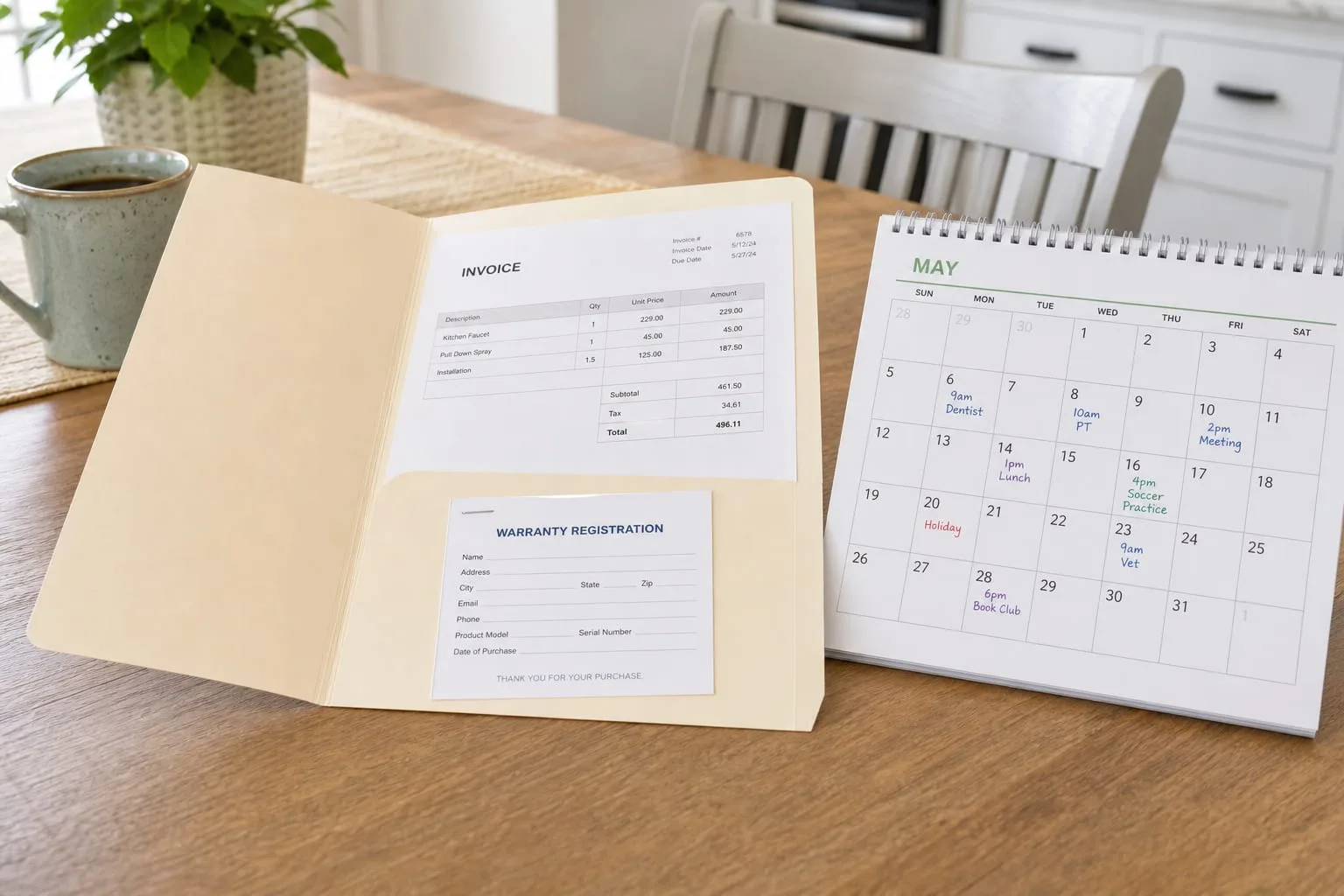
The membrane and the pump were not the installer's products. They came from a manufacturer that certifies installers, sells through a regional representative, and issues a system warranty registered in the homeowner's name at the time of installation. That registration was in her closing folder, stapled behind the invoice, and she had read it once. The manufacturer was a party to the transaction in every practical sense: it had underwritten the promise, it had a commercial interest in whether its certified installer was producing wet basements, and its representative had standing to send a second certified crew to inspect work he had not sold.
That representative was reachable by phone in the third week. Nobody called him until the thirty-first. Manufacturers hold leverage a homeowner does not: certification that can be pulled, warranty claims that can be paid directly, and a dealer relationship worth more to the installer than any single job. The Federal Trade Commission oversees how consumer product warranties are written and disclosed, which is why that registration document exists in a readable form at all, and why the obligations it describes belong to a company with an address rather than to a truck. Reading it early changes who you are arguing with.
What the nine months after the offer actually cost
The dispute ran another nine months. It settled at the reseal she had been offered in week six, plus a credit closer to twenty-six hundred dollars, plus the warranty term extended and confirmed in writing by the manufacturer. Against the original offer, she gained roughly fourteen hundred dollars and a document that mattered. Set beside that: two additional contractor visits inside four-hour arrival windows, an independent inspection she paid for and had to attend, a state licensing board site visit scheduled by someone else's calendar, a mediation morning downtown, and the filing trip that preceded it.
Count them honestly and the total lands near forty hours, almost all of it on weekdays between nine and four. She used paid time off for most of it. Two of those days were the days her mother needed a ride to a cardiology appointment, and both got moved. Her afternoon pickup got covered by a neighbor four times, which is a debt that does not appear on any ledger but gets repaid. Nobody traces a missed cardiology appointment back to a decision about a basement, and that is exactly why the decision keeps getting made the same way.
Pricing an offer in hours before you answer it
The useful discipline is to convert an offer into calendar before you respond to it, and to do the conversion in writing. Ask what remains unresolved between the offer and your position, then ask what specific appointments would be required to move that difference: an inspection, a site visit, a hearing, a mediation, a second estimate somebody has to be home for. Assign each one a realistic block, not an optimistic one, because arrival windows and rescheduling are the norm rather than the exception. Then price your own time at whatever a day off genuinely costs you, including the appointments it displaces.
Run the same arithmetic on the overlooked party. If a manufacturer, a supplier, a franchisor, a bonding company, or a licensing board has independent authority over the outcome, bringing them in early can collapse eight of those appointments into two letters and one phone call, which is a different and much better trade than accepting a bad number. Her fourteen hundred dollars was real money. Reached in week ten by a manufacturer's representative rather than in month nine by a mediator, it would have cost perhaps six hours.
What the case actually teaches about timing
Knowing when to settle is not a temperament and it is not a tolerance for conflict. It is a sequencing question, and the sequence runs in a fixed order: identify every party with authority over the remedy, contact the ones outside the two-person argument, and only then decide whether the remaining gap justifies the remaining appointments. Done in that order, the settle-or-push question usually answers itself, because the strongest lever gets pulled while the dispute is still cheap in hours. Done in reverse, you pay in weekday mornings for information that was sitting in the closing folder.
Her file now opens with a single page listing the manufacturer, the representative's direct line, the warranty registration number, and the licensing board's complaint address. When the pump eventually fails, and pumps do, the first call will not be to the installer. It will be to the party who guaranteed the system, and the whole matter will most likely be handled in the time it takes to make one phone call from a desk.